Your turf has been cleaned. What should you do next? Keep the first week simple: follow the aftercare instructions, pick up fresh waste, clear loose leaves and watch the spots your family uses most. You do not need to add another treatment just because the work is finished. This guide helps you care for the result without overdoing it.
Before the cleaner leaves, ask three questions
Ask what was used, when people and pets can return, and whether the turf needs any rinsing or drying time. Write the answers down or save the care sheet. Different cleaners and infill products can have different directions. A yard that looks dry is not, by itself, proof that every product requirement has been met. If the instructions are missing or unclear, contact the service provider before letting children or pets back onto treated turf.
On the first day, give the treatment its required time
Follow the specific re-entry and aftercare directions you were given. Do not add a hose rinse, another cleaner or a deodorizer unless those directions call for it. Extra water may wash away a treatment that was meant to remain for a stated contact time. Some products do require rinsing, so there is no single rule for every visit. Keep toys, pet bowls and loose items off the work area until the required steps are complete.
When normal use resumes, restart small daily habits
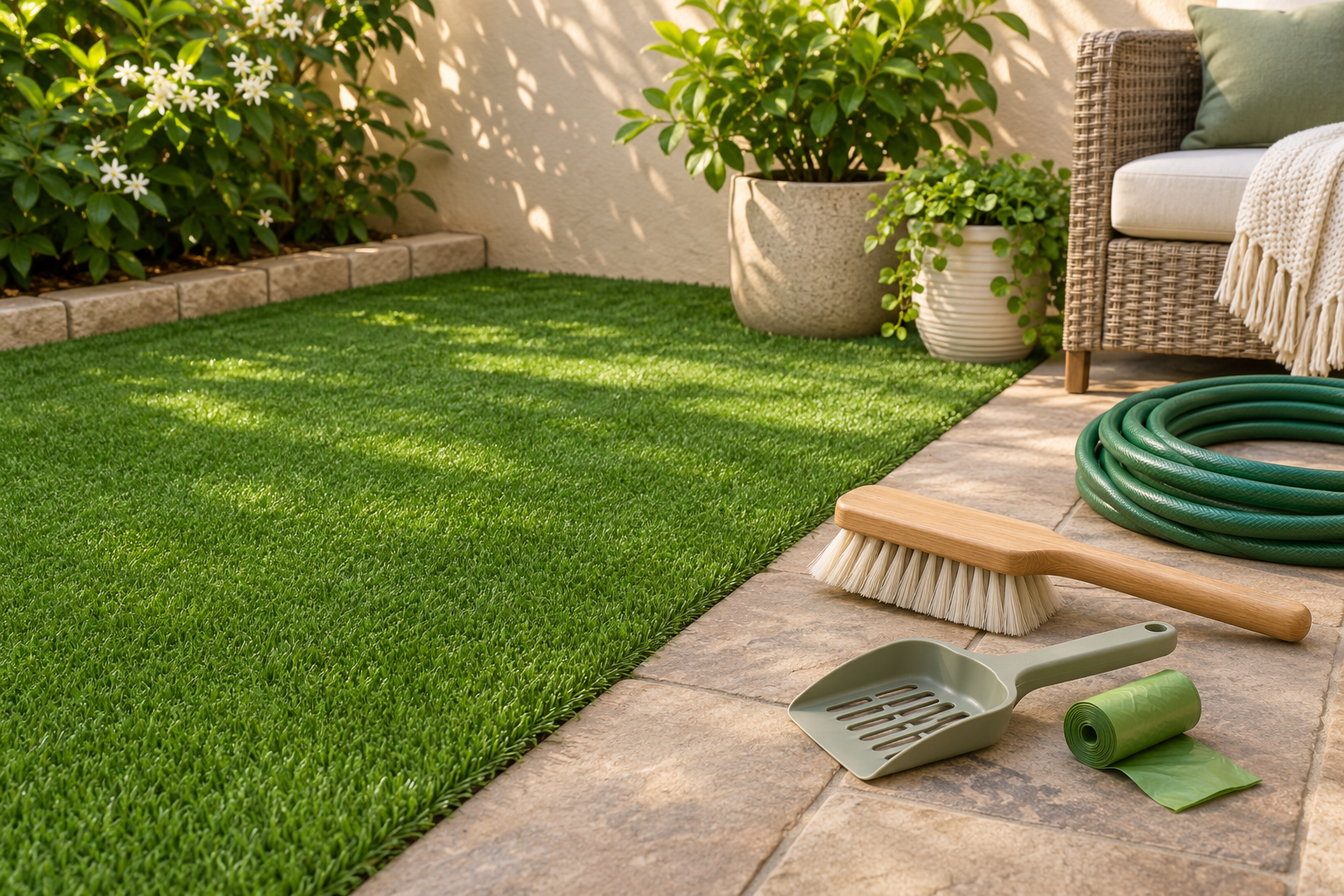
Pick up solid pet waste promptly. Check the corners your dog returns to and remove leaves or windblown litter before they settle between the blades. Follow the turf and infill maker’s guidance for routine rinsing. Do not try to prevent all future odor by applying extra chemicals every day. Continued pet use means fresh residue can build up again. Cleaning starts a new maintenance cycle; it does not stop the yard from being used.
Let the fibers settle without aggressive brushing
Foot traffic can press fibers down again, especially near a gate, dog door or patio. That does not automatically mean the cleaning failed or that the turf needs more infill. If light brushing is recommended for your turf, use the approved non-metal tool and technique. Keep tools clear of loose edges and seams. Avoid pressure washing or renting a power broom simply to chase a perfect finish. Short putting-green turf needs its own care instructions.
Compare the same spots during the week
Take a few photos after the work and again near the end of the week, from the same position and in similar light. Look at debris, matted paths and the areas that concerned you before the cleaning. If odor returns, note where you notice it, recent pet use and whether the turf is wet or dry. These observations are more useful than judging color alone. They help your cleaner understand what changed without asking you to diagnose the cause.
Flag a problem before adding another product
Contact your provider if a treated area has an unexpected residue, the smell quickly returns or a patch remains unusually wet. Explain what you see and share a photo when useful. Do not mix cleaners or cover the problem with fragrance. Persistent pooling, open seams or damaged backing may need an installer’s assessment rather than more cleaning. The Neighborhood Turf Guy provides cleaning and maintenance for existing turf. Odor treatment may reduce odors, but we do not guarantee that odors will be completely eliminated.
Use the first week to choose a manageable routine
At the end of the week, ask which small tasks made the biggest difference. A lawn under trees may need frequent leaf pickup. A busy dog corner may need closer attention than the rest of the yard. Save your cleaning date, care directions and any questions for the next visit. If you need help with existing artificial turf in Dallas–Fort Worth, describe its size, pet use and main concern when requesting a cleaning. Service scope and timing are confirmed after review.
Your practical checklist
- Save the product names and aftercare directions from your visit.
- Follow all contact-time, rinse, drying and re-entry instructions.
- Pick up fresh pet waste and loose debris as normal use resumes.
- Use only tools and methods approved for your turf and infill.
- Photograph recurring concerns before trying another treatment.
- Keep a short service record for your next cleaning.
Questions homeowners ask
Can my dog go back outside right after the cleaning?
Use the re-entry instructions for the products and work performed. There is no universal wait time. If you were not given clear directions, ask your provider before allowing pets onto the treated area.
Should I hose the turf down the next morning?
Only if the aftercare or product instructions call for it. Some treatments need rinsing, while others need time to remain in place. Your turf and infill guidance also matters.
Does returning odor mean I need a second cleaning right away?
Not necessarily. Fresh pet use, remaining buildup or drainage conditions can affect odor. Tell your cleaner where and when it returns so the next step can match the problem. Do not assume more product is the answer.
Want a hand with your turf?
Request help with artificial turf cleaning directly from The Neighborhood Turf Guy. We review the property and local fulfillment before confirming service. Request Cleaning to discuss your needs. A request is not a booking or signed agreement.
Always follow the care guidance for your specific turf and infill. This guide is general care advice and does not replace your manufacturer’s instructions.