
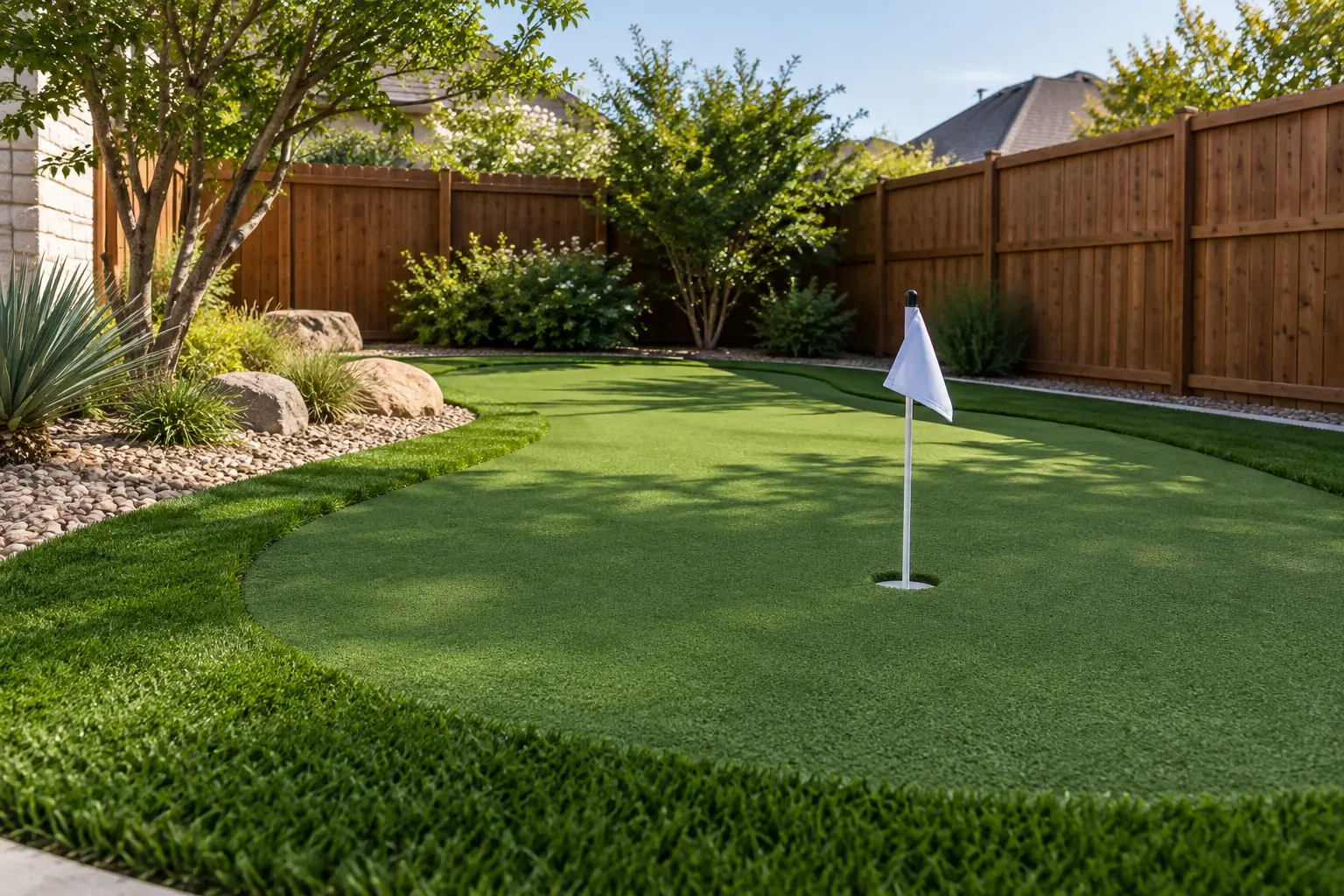
A putting green needs a maintenance plan suited to its construction and intended ball roll. Remove loose debris gently, inspect the cups and fringe and confirm the product instructions before brushing or adding material. Landscape-lawn methods should not automatically be applied to a specialized short-pile surface.
Keep the green and fringe separate in the plan
A backyard green may combine short-pile putting turf, longer fringe and surrounding landscape lawn. Those surfaces can have different cleaning and grooming requirements even when they touch. Photograph the whole installation and identify each type in your request. Collect any product information from the installer. Do not assume the same brush direction, equipment setting or infill is suitable throughout. A clear map helps the provider avoid treating the putting surface as an ordinary lawn and gives you a more useful service scope.
Remove loose material without changing the surface
Pick up leaves, small twigs and other debris using methods appropriate to the product. Work gently around cups and seams. Avoid using a sharp tool to dig embedded material from the pile. If a ball is affected by a visible obstruction, remove the obstruction rather than immediately adding sand or brushing aggressively. Material falling from surrounding beds can return quickly, so include the perimeter in your regular check. Keeping loose debris under control is a distinct maintenance task from altering the playing characteristics of the green.
Record performance before maintenance
Choose a few repeatable putts and note where they begin and end under ordinary conditions. You do not need to claim a tournament-grade speed or measure a formal rating. The purpose is to record whether a familiar line has changed. Include the location of a bump, depression or unpredictable break in photos. Wind, moisture and ball condition can also influence what you notice, so compare reasonably similar conditions. This record makes it easier to discuss the original concern and avoid confusing cosmetic improvement with a change in play.
Inspect cups and adjoining seams
Check for loose or damaged cup components, raised turf around the rim and gaps where the fringe joins the green. Avoid reaching into an unknown cavity or pulling turf up to adjust it. A visible defect may require installer attention before equipment is used. Mention any recent repairs or replacement cups. A cleaner should understand where those components are and how to work around them. The job may include careful surface care while leaving specialized structural or performance adjustments to someone familiar with the installation.
Treat infill changes as a separate decision
The type and quantity of material on a putting surface can affect how it plays. Ask for the product-specific basis of any recommendation to add, redistribute or remove material. Do not use leftover landscape infill on the green because it looks similar. If the original specification is unknown, request an assessment rather than guessing. Clarify whether the service is intended only to clean the surface or also to adjust performance. Keeping those scopes separate prevents a routine cleaning from unintentionally becoming an unplanned modification.
Review the result against the original goal
After the surface is ready for use, repeat the same ordinary putts and inspect cleanliness around cups and fringe. Report unexpected changes with photos and the locations you recorded. A clean green can still have an underlying base issue that surface care will not resolve. Continue suitable debris collection and keep heavy furniture or equipment away from the playing area. We can discuss cleaning needs for backyard putting spaces and identify when the original installer should be involved in more specialized corrections.
Your practical checklist
- Identify putting turf, fringe and adjoining landscape surfaces.
- Keep product and installer information available.
- Record a few repeatable putts before work.
- Photograph cups, raised spots and seam concerns.
- Approve any material or performance adjustment separately.
Questions homeowners ask
Can a power broom be used on every putting green?
No. Suitability depends on the specific product, construction and maintenance instructions.
Will cleaning make the green faster?
Not necessarily. Cleaning removes appropriate buildup; changing speed or roll should be a separately assessed goal.
Can I add ordinary lawn infill to the putting surface?
Do not assume it is compatible. Follow the specification for that particular green.
Want a hand with your turf?
Request help with artificial turf cleaning directly from The Neighborhood Turf Guy. We review the property and local fulfillment before confirming service. Request Cleaning to discuss your needs. A request is not a booking or signed agreement.
Always follow the care guidance for your specific turf and infill. This guide is general care advice and does not replace your manufacturer’s instructions.