
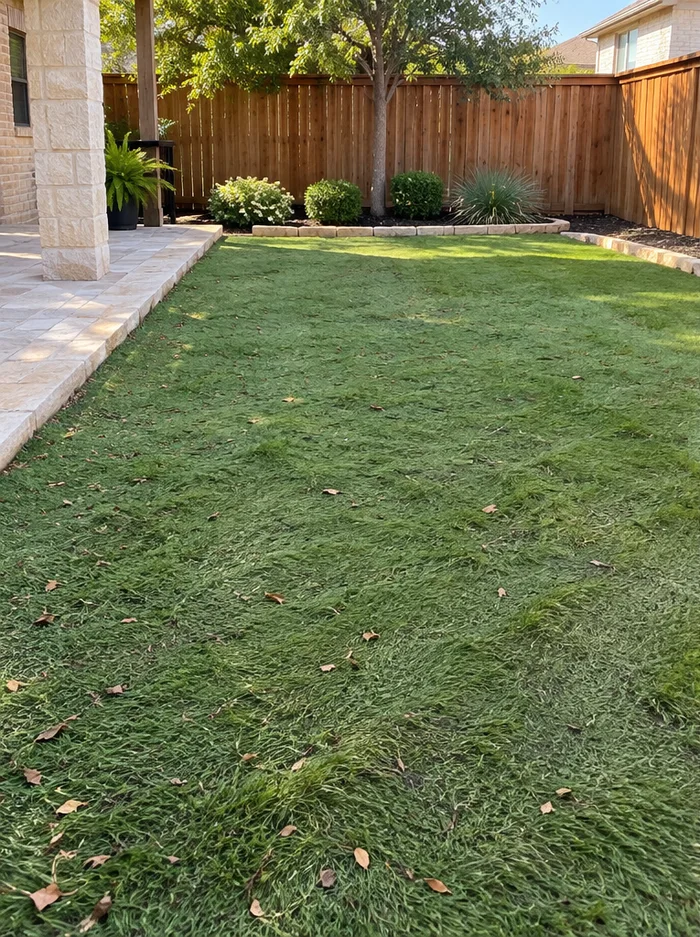
After landscaping, painting or a home improvement project, do not treat every piece of debris as ordinary leaves. Identify sharp material, unknown residues and equipment damage before cleaning. A turf-service provider needs the project history so they can explain which surface-care tasks are appropriate and which concerns require the contractor or another specialist.
Document the project before clearing the evidence
Take overall photos and close-ups of the affected area while the condition is visible. Note what work was performed, where materials were stored and how equipment crossed the lawn. Record spills or dust sources if known. Share the information with the responsible contractor as appropriate and keep your own copy. This is practical documentation, not a determination of responsibility. It helps a cleaning provider understand whether the issue is loose soil, a paint residue, embedded hardware or a physical change to the installation.
Identify sharp and unfamiliar debris
Look carefully for screws, nails, wire, fragments and other material that can be hidden among fibers. Keep people and pets from using an area containing unresolved sharp debris. Do not run a power broom through it in an attempt to make it disappear. Use an appropriate cleanup professional when the material cannot be safely identified or removed. A routine turf-cleaning scope is not automatically a construction-site clearance. Explain the concern before arranging service so equipment and handling decisions are informed.
Keep unknown substances out of improvised mixtures
If paint, adhesive, solvent or another project material reached the turf, identify the product and provide label information where possible. Do not add a household cleaner or solvent based on guesswork. The turf manufacturer and material supplier may need to advise on compatibility. Scraping or aggressive rubbing can change fibers and backing. Photograph what remains after any contractor cleanup and record what was used. A provider should distinguish possible residue removal from permanent damage and acknowledge when product-specific guidance is needed.
Inspect access routes and storage footprints
Heavy loads, repeated wheel traffic and materials stored on the lawn can coincide with flattened fibers, shifted edges or changed support. Check those locations separately from the dusty open area. Do not assume grooming will correct a depression or a moving seam. Photograph the route and explain how long the loading lasted. The assessment may call for cleaning in one section and installer review in another. Keeping those concerns separate avoids a visually tidy finish being mistaken for resolution of every effect of the project.
Sequence cleanup before the refresh
Ask the contractor to address project-specific debris and unresolved hazards before ordinary turf maintenance begins. Once the area is suitable, a cleaner can assess loose dirt, embedded residue and appropriate grooming. Confirm the boundaries between those scopes in writing. If nearby work continues generating dust, discuss whether to wait until it ends rather than immediately paying for a whole-yard refresh. A staged approach can be more practical than repeating the same cleaning while the source is still active.
Keep the final record and future protection plan
Save before and after photos, the agreed work and any remaining defects. If another project is planned, discuss surface protection and access with that contractor before materials arrive. Do not assume any covering is suitable indefinitely; follow guidance that protects the turf and avoids trapping heat or moisture. We can review turf cleaning after completed home projects in DFW, Austin and Houston and explain when construction-specific cleanup, compatibility advice or an installer assessment needs to happen first.
Your practical checklist
- Record the project type, dates and access route.
- Photograph debris, spills and load footprints.
- Keep unresolved sharp-debris areas out of use.
- Identify product labels before any stain treatment.
- Complete appropriate project cleanup before turf refreshing.
Questions homeowners ask
Can you power broom nails or screws out of the lawn?
Mechanical grooming should not be used on unresolved sharp debris. Appropriate clearance comes first.
Is paint on turf always removable?
No. Product compatibility and the condition must be assessed, and some material damage may remain.
Should I clean while construction is still producing dust?
Discuss timing and priorities. Waiting until the source ends may avoid repeatedly cleaning the same buildup.
Want a hand with your turf?
Request help with artificial turf cleaning directly from The Neighborhood Turf Guy. We review the property and local fulfillment before confirming service. Request Cleaning to discuss your needs. A request is not a booking or signed agreement.
Always follow the care guidance for your specific turf and infill. This guide is general care advice and does not replace your manufacturer’s instructions.