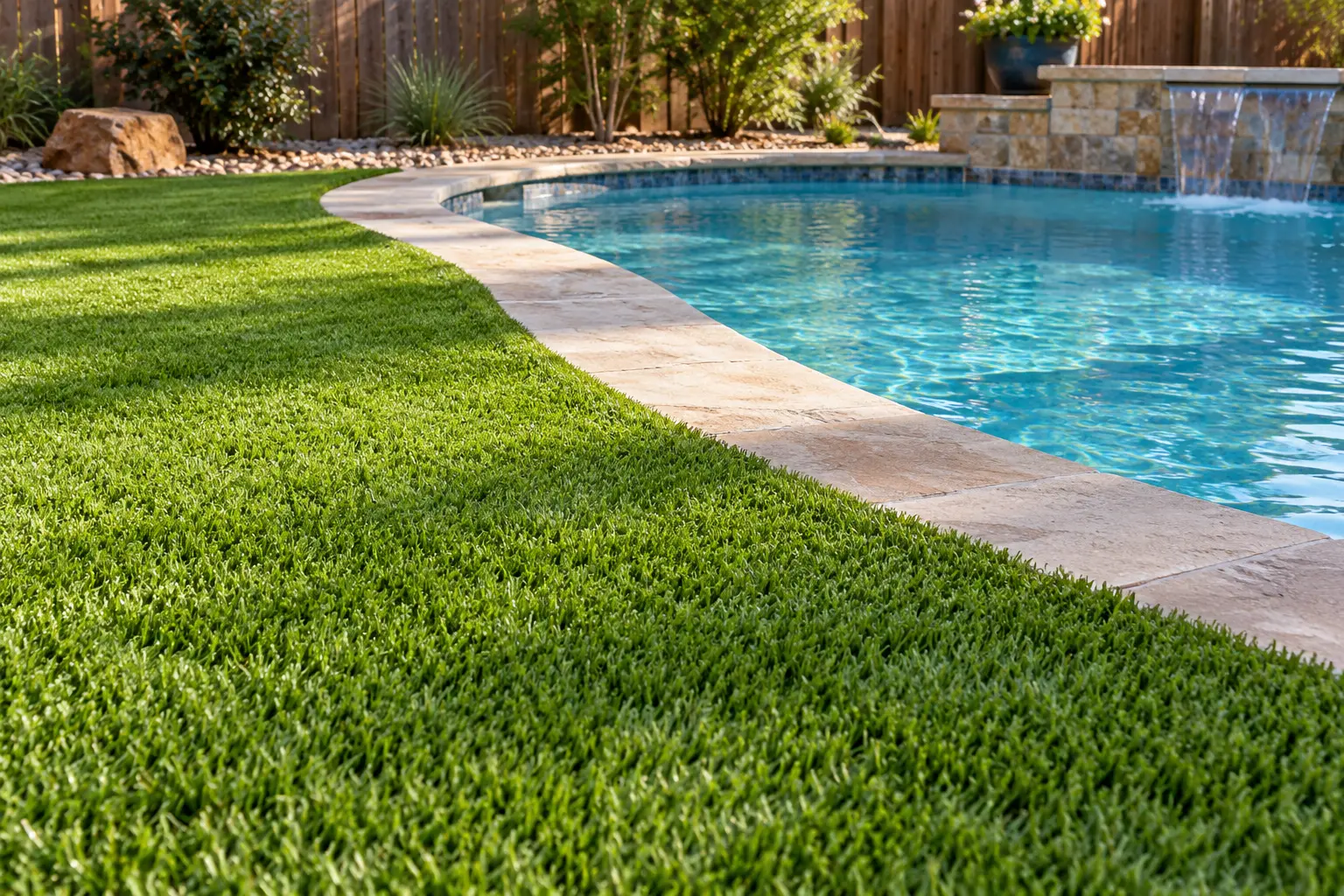
Pool-side turf care should protect both the artificial lawn and the pool. Collect loose debris away from the water, inspect the coping transitions and choose turf-compatible cleaning methods. A clean-looking surface is only part of the job: residue, wet paths and loose edges also affect how well the area works for your household.
Plan a collection route before you start
Walk the pool perimeter and decide where leaves, hair and dirt will be collected. The shortest route is not always the right one if it ends in the water. Use suitable tools to move material toward a manageable pickup point, keeping it away from skimmers and drains. Check wind conditions before using a blower near the pool. If the area is narrow or access is awkward, tell your cleaner. Planning the direction of work prevents the turf refresh from becoming a separate pool-cleaning problem.
Inspect the boundary at the coping
Look for lifting turf, a gap beside the paving or a raised transition along common walking routes. Photograph concerns before brushing or rinsing. Do not tuck loose material under coping or drive fasteners into an unfamiliar edge. Pool surrounds may have details that differ from the rest of the yard. Explain any previous repairs and fragile stone or finish. A suitable cleaning plan should account for the entire work area, including where equipment will travel and how adjacent surfaces will be protected.
Treat swimmers’ paths as a distinct zone
The route from the pool ladder or steps to the patio often receives concentrated traffic. Inspect whether the fibers are bent, residue has collected or water lingers there. Suitable grooming may improve ordinary flattening, but it does not repair a low spot or a failing seam. Move light furniture carefully to check beneath it, and avoid dragging legs across turf. Ask whether the plan includes the busy route and not only the open center of the lawn. Those smaller sections may determine how tidy the space feels.
Choose products for turf, not for pool decking
A cleaner used on stone or concrete may not be appropriate for the turf, its backing or infill. Identify both surfaces before applying anything. Follow product labels and keep treatment runoff from entering the pool as directed. Do not mix pool chemicals into a turf-cleaning solution. Tell the service provider about nearby plants and sensitive finishes. If compatibility is unclear, obtain guidance before proceeding. A professional should explain the selected method and the practical steps used to limit residue around the water.
Observe water movement during normal use
Note where the lawn stays damp after swimming, rain or ordinary rinsing. A consistently wet path may need assessment of runoff and drainage rather than stronger surface treatment. Record when it was used and how the condition changes afterward. Avoid deliberately flooding the pool surround as a test. Share photos of adjoining paving and slopes so the provider sees where water may enter. Keeping the drainage concern distinct helps you understand what the cleaning visit can improve and which issues require a separate installation assessment.
Allow time before the next swim gathering
Arrange cleaning early enough to follow the treatment’s drying and re-entry instructions. Ask whether furniture can remain in place and who will move it if needed. Confirm access to gates and any required water or power before the appointment. Afterward, inspect the pool edge for remaining loose debris and save the care instructions. A routine that includes waste pickup, leaf collection and attention to busy paths can keep the area enjoyable between professional visits without assuming that one refresh will prevent all future buildup.
Your practical checklist
- Choose a debris collection point away from the pool.
- Photograph lifting edges and coping transitions.
- Identify traffic paths and persistent wet areas.
- Confirm product compatibility with turf and nearby finishes.
- Schedule around the product-specific drying and re-entry time.
Questions homeowners ask
Can I use pool chlorine to clean the lawn?
Do not improvise a turf cleaner with pool chemicals. Follow the turf manufacturer’s guidance and the label for an appropriate cleaning product.
Should debris be rinsed toward a pool drain?
No. Collect it appropriately and keep it out of the pool and drainage openings.
Does pool-side turf need different equipment?
The surface and access determine the method. Coping, narrow paths, seams and specialty turf all influence the plan.
Want a hand with your turf?
Request help with artificial turf cleaning directly from The Neighborhood Turf Guy. We review the property and local fulfillment before confirming service. Request Cleaning to discuss your needs. A request is not a booking or signed agreement.
Always follow the care guidance for your specific turf and infill. This guide is general care advice and does not replace your manufacturer’s instructions.