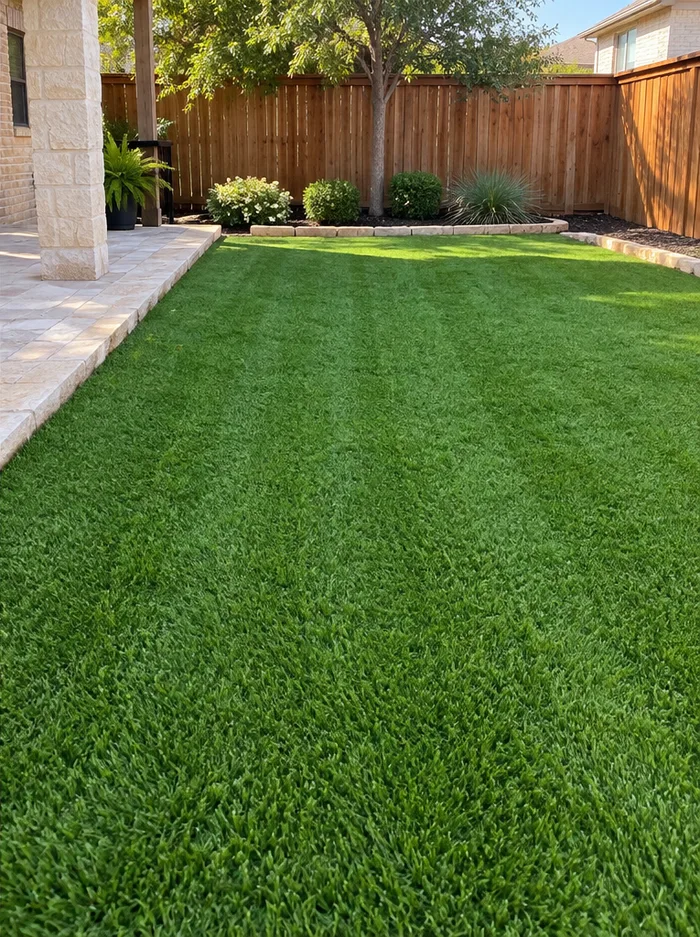
Dust and pollen can make a green artificial lawn feel dirty even when the fibers are in good condition. For an Austin yard, start by removing loose material, reviewing the installed turf’s rinse instructions and keeping nearby debris from returning immediately. The aim is a manageable routine that matches your yard rather than a blanket cleaning schedule.
Identify where the material comes from
Look at adjoining soil, planting beds, construction activity, trees and frequently opened gates. Dust entering from a bare side yard is a different problem from seasonal material falling from overhead. Photograph the perimeter and note whether the buildup is concentrated or widespread. You do not need to identify every species of pollen to plan surface care. What matters is how the material arrives, where it settles and whether ordinary maintenance is keeping pace. Preventing repeat tracking can reduce the amount of cleaning required.
Collect loose buildup before wet cleaning
Begin with gentle collection of leaves and visible debris using tools suitable for your installation. Work around seams and narrow borders deliberately. Dry material may be easier to move before water turns it into a layer among the fibers. Avoid directing a blower toward people, open doors or a pool, and follow equipment instructions. If a heavy layer is embedded, do not force a rake through it. Ask for an appropriate deeper cleaning process rather than treating every type of buildup as loose dust.
Rinse according to the actual system
A controlled rinse may be appropriate for routine dust when the turf manufacturer permits it and water can leave the area as intended. Check any infill-specific guidance as well. Use a manageable area and observe the runoff rather than washing material into a neighboring property or storm drain. Do not substitute a pressure washer simply because a hose seems slow. If the surface remains wet or residue is still obvious afterward, record that result. It may indicate that more than a quick rinse is needed.
Keep tracking routes under control
A side gate, gravel path or loose planting bed can repeatedly deliver material to clean turf. Consider a practical transition area and keep nearby paving tidy using methods appropriate to those surfaces. Avoid adding loose products onto the turf to hide dust. At the back door, a suitable mat can help limit material brought indoors, but it should not permanently trap moisture against the lawn. Lift movable items periodically and check underneath. The maintenance plan should include these adjoining areas because they influence how quickly the lawn becomes dirty again.
Pair cleaning with a condition check
Once buildup is removed, inspect the exposed surface. Dust can conceal a small seam opening, a worn route or uneven infill. Photograph problems before applying products or grooming mechanically. Cleaning and brushing have different purposes, and the quote should say which are included. If the lawn is already standing well and no residue remains, extensive grooming may not be necessary. If traffic paths are flattened, discuss a suitable approach. The condition check helps avoid ordering services based solely on the fact that the lawn looked dull.
Measure success by usability, not color alone
Bright sun and shade can make the same fibers look like different shades of green. Compare cleanliness at close range, the amount of loose material and how the area feels to use. Keep matching photos and note how soon buildup returns. If pollen or dust is entering continuously, some recurring maintenance will be needed even after a professional visit. Austin homeowners can share the sources of buildup, turf size and overall photos so we can recommend cleaning that fits the actual workload.
Your practical checklist
- Identify trees, bare soil and tracking routes around the lawn.
- Remove suitable loose material before rinsing.
- Review turf and infill care instructions.
- Keep debris out of pools, neighboring yards and drains.
- Inspect seams and traffic paths once the surface is visible.
Questions homeowners ask
Does a dusty lawn need deodorizing?
Not automatically. Deodorizing should address an identified odor concern rather than be added simply because the surface has dust.
Can turf cleaning treat seasonal allergies?
We provide surface maintenance and do not make medical claims. Discuss personal allergy concerns with an appropriate healthcare professional.
Will rinsing make every lawn look new?
No. It may remove some surface material, but wear, stains and structural concerns need separate assessment.
Want a hand with your turf?
Request help with artificial turf cleaning directly from The Neighborhood Turf Guy. We review the property and local fulfillment before confirming service. Request Cleaning to discuss your needs. A request is not a booking or signed agreement.
Always follow the care guidance for your specific turf and infill. This guide is general care advice and does not replace your manufacturer’s instructions.