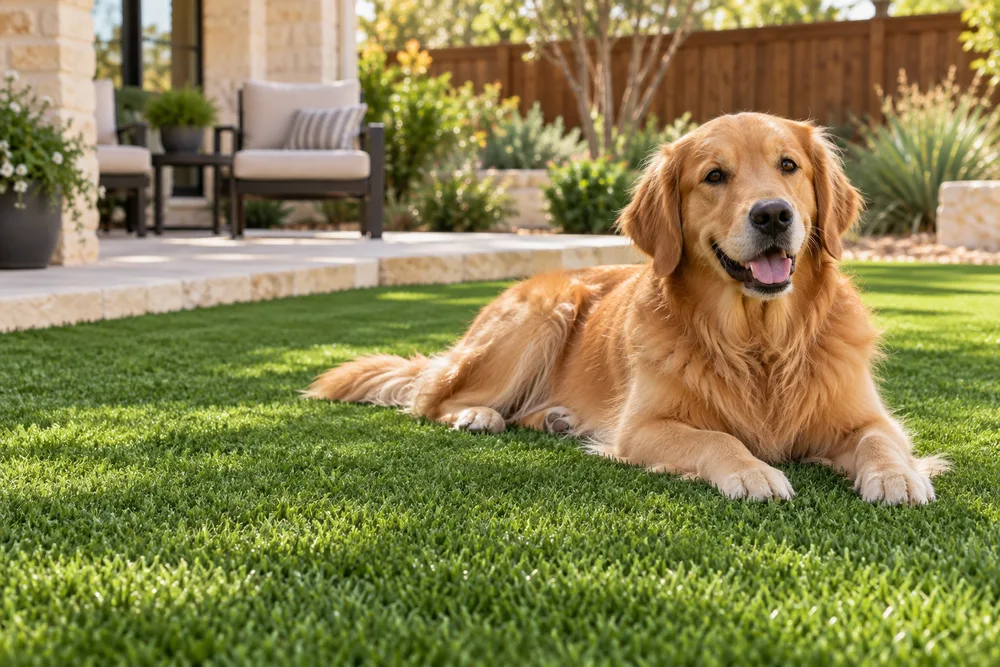
Start by removing pet waste and loose debris, then clean the affected area with a product approved for your turf. Follow the product’s contact-time and rinsing instructions. If odor keeps returning, the infill or drainage may need attention as well as the surface.
Find the spots your dog uses most
A whole yard does not always need the same level of attention. Notice where your dog returns, where the smell is strongest and whether those areas stay wet. Clear hair, leaves and other debris first so treatment can reach the fibers rather than sitting on top of loose material.
Use the right cleaner, correctly
Check your turf manufacturer’s care instructions before applying a product. Do not mix cleaners or assume a stronger concentration will work better. A turf-compatible deodorizer may help, but the label determines the dilution, contact time and when people and pets can return.
Know when rinsing has reached its limit
A hose can dilute and flush some residue, but repeated odor can mean the problem is deeper in the infill or installation. Check whether water drains as expected. If water lingers or the smell returns immediately, tell your cleaner instead of repeatedly adding different products.
Build a repeatable routine
Pick up solids promptly and maintain pet areas according to your turf and infill guidance. Professional cleaning can help with accumulated residue and grooming. It is an improvement you maintain over time, not a permanent cure for a yard dogs continue using.
Want a hand with your turf?
Request help with pet odor treatment directly from The Neighborhood Turf Guy. We review the property and local fulfillment before confirming service. Request Cleaning to discuss your needs. A request is not a booking or signed agreement.
Always follow the care guidance for your specific turf and infill. This guide is general care advice and does not replace your manufacturer’s instructions.