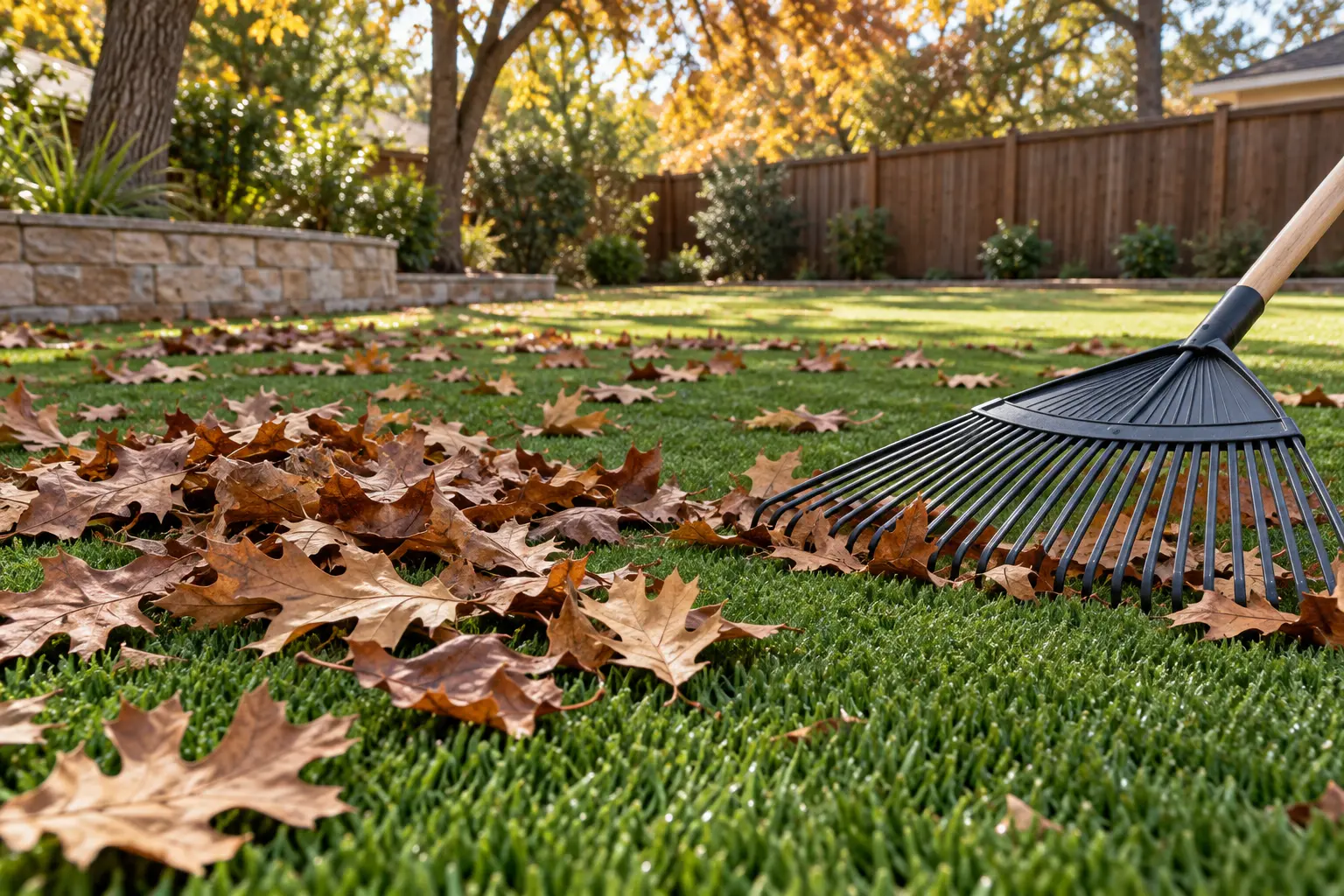
A useful fall refresh starts with what has collected in the yard, not simply how green it looks. Clear loose leaves, check busy paths, assess pet areas and inspect the edges before choosing cleaning, grooming or infill work. For Dallas–Fort Worth homeowners, autumn is a practical time to reset the spaces used heavily through summer and prepare for more time outdoors.
Make a map of the yard before cleaning
Walk the lawn slowly and divide it into ordinary-use areas, pet spots, heavily traveled routes and shaded corners. A photo from the back door gives you a reference, but close-ups tell a different story: hair caught between fibers, debris against edging and paths that stay flattened. Note where furniture has stood throughout summer. Move only pieces you can safely handle; lifting a heavy table across a seam can cause more trouble than the dirty patch beneath it. This map keeps attention focused on the places that need work.
Remove leaves before reaching for water
Loose leaves are easier to collect before they are wet and pressed into the pile. Use a tool approved for your turf, and move material toward a collection area rather than into landscaping or a storm drain. Work carefully near seams and corners where a rake can catch a loose edge. Repeat a light pass instead of forcing a tool through a heavy mat of debris. Once the loose material is gone, you can see whether the remaining discoloration is dust, staining, trapped organic matter or actual fiber damage.
Separate pet residue from ordinary dirt
A dog’s preferred corner may need a different treatment from the rest of the yard. Record how many pets use the space and whether the smell appears after rain, during warmer afternoons or immediately after use. Remove solid waste before any cleaning. Choose a turf-compatible product using the actual label and manufacturer guidance, including dilution and re-entry instructions. If the same corner stays wet or odor returns quickly, flag that for assessment. A seasonal refresh can address buildup, but continued pet use still needs an everyday routine.
Groom paths after checking the structure
Look along the route between the patio, gate and dog door. If the fibers are simply bent, suitable grooming may improve their appearance. If an edge is lifted or a seam has opened, aggressive brushing can make the defect worse. Check those transitions first. Different turf types and putting greens need different approaches; tell your cleaner which surfaces are installed. Ask whether the plan includes debris removal and grooming, and whether any infill redistribution is appropriate for your system. Do not assume a stronger machine is automatically better.
Use the refresh to establish a baseline
Take matching photographs after the work, from the same position and in similar light. Compare how fibers stand, how much loose debris remains and whether the problem areas feel cleaner. Avoid judging color alone because lighting changes it substantially. Write down the products and any preparation or drying instructions provided. If an issue remains, distinguish a cleaning limitation from a problem with seams, support or drainage. A record makes the next maintenance decision easier and helps prevent repeatedly paying for a treatment that cannot address the underlying concern.
Plan around your actual household
A shaded lawn under trees and a narrow two-dog run should not share a schedule simply because they have the same square footage. Watch how quickly leaves, hair and residue return. Put a short debris check into your weekly yard routine and review pet areas more often as needed. Before hosting outdoors, leave enough time for the work and the treatment-specific drying period. We serve DFW homeowners and can review overall photos, close-ups and access details to recommend a suitable fall cleaning scope.
Your practical checklist
- Photograph the yard and identify pet spots, paths and shaded corners.
- Remove toys and loose waste; note heavy furniture that requires help.
- Show your cleaner seams, pool edges and areas that stay damp.
- Confirm cleaning, grooming and any separate infill or repair work.
- Keep after-visit photos and the care instructions for the products used.
Questions homeowners ask
Does fall rain replace a turf cleaning?
Rain may rinse some loose material, but it does not guarantee that trapped debris or pet residue has been removed. Check the condition after the surface dries.
Should every lawn get new infill during a fall refresh?
No. First identify the turf system and current material. Redistribution, a compatible top-up or no infill work may each be appropriate.
Do you clean turf throughout DFW?
We serve Dallas–Fort Worth. Send your address and turf details so we can confirm availability and the scope for your yard.
Want a hand with your turf?
Request help with full turf refresh directly from The Neighborhood Turf Guy. We review the property and local fulfillment before confirming service. Request Cleaning to discuss your needs. A request is not a booking or signed agreement.
Always follow the care guidance for your specific turf and infill. This guide is general care advice and does not replace your manufacturer’s instructions.