
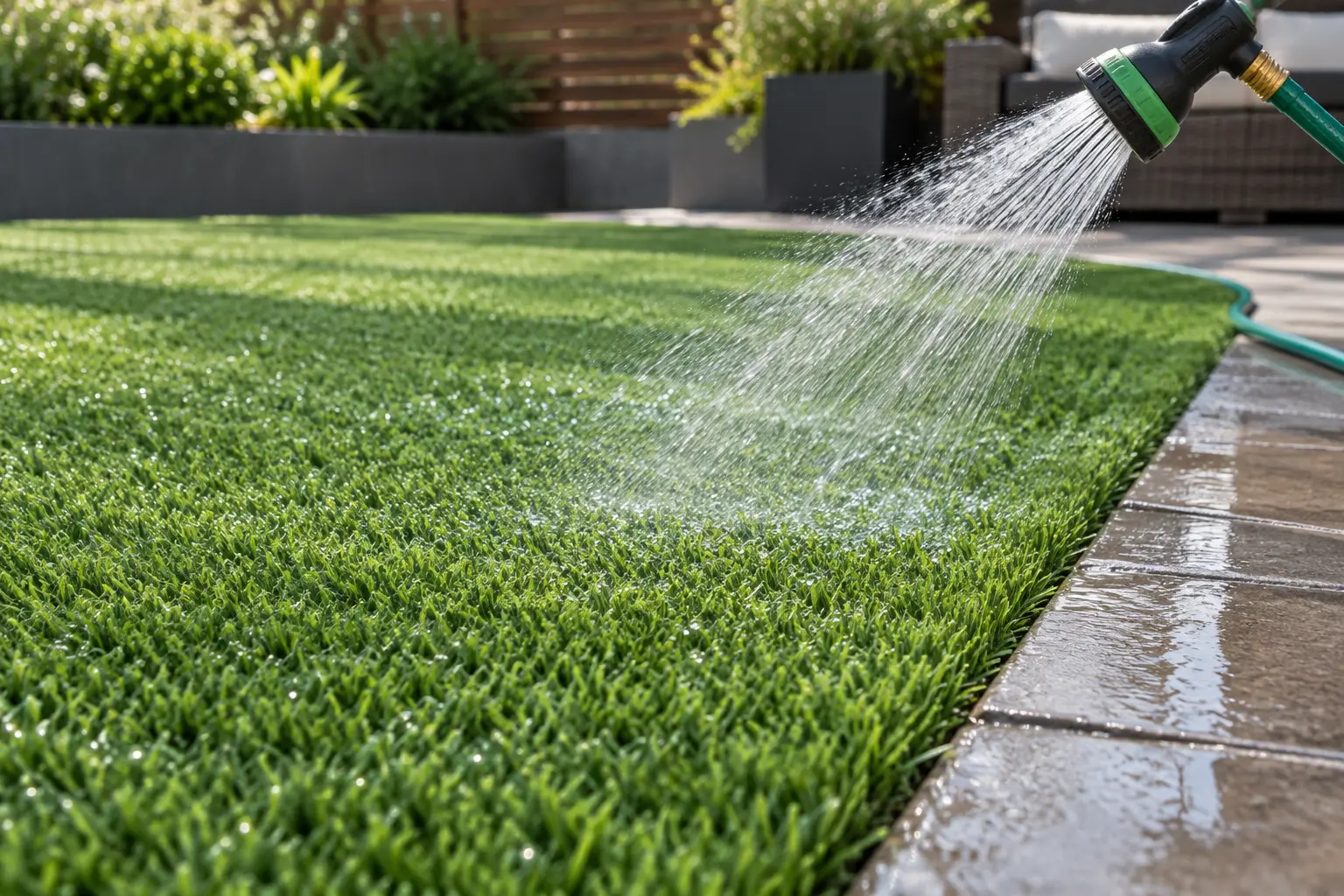
A wet lawn and a dirty lawn may need different solutions. If your Houston artificial turf stays saturated after ordinary rain, document the pattern, inspect nearby runoff routes and tell your service provider before work is arranged. Cleaning can remove buildup, but it cannot rebuild a poorly draining base or change the grade of the yard.
Describe wetness with a timeline
The phrase ‘it never dries’ is understandable but difficult to act on. Record when the rain stopped, when you checked the yard and whether neighboring areas had dried. Photograph the same location more than once. A shaded strip beside a fence may behave differently from a sunny open section. Note whether the issue is new or has happened since installation. This timeline helps distinguish an occasional condition from a recurring pattern without trying to diagnose hidden components from a single puddle.
Look around the turf, not only at it
Roof downspouts, sloping patios, adjacent beds and neighboring hard surfaces may send water toward the installation. Walk the perimeter and look for visible runoff paths, blocked surface drains or soil washed onto the grass. Do not climb onto roofs or dismantle drainage systems to investigate. A clear photo of where water enters is often useful. Tell the cleaner if nearby landscape work changed the area recently. Maintenance decisions make more sense when the whole yard is considered rather than treating the artificial lawn as an isolated mat.
Clear accessible loose debris
Leaves can accumulate along edging or over a visible drain cover. Collect material you can safely reach without lifting the turf or opening buried systems. Removing loose buildup may help routine maintenance, but it does not prove that the installation’s drainage is adequate. Avoid pushing debris into drain openings with a hose. If a cover is damaged or a drain location is unclear, leave the repair to an appropriate professional. Keep a record of what you removed so you can see whether the condition changes during the next normal rainfall.
Explain pet use before selecting treatment
An area that combines pet residue and persistent dampness deserves an informed cleaning plan. Show where dogs use the lawn and where water tends to stand. The same spot may need residue removal and a separate drainage assessment. Product application should follow the actual label, including weather and drying requirements. A treatment performed when conditions are unsuitable may not be the best use of a visit. Ask your cleaner whether the area needs to dry or whether the appointment should be adjusted.
Know the boundary of a cleaning visit
A cleaner can observe the surface, remove suitable debris, apply compatible treatments and report visible concerns. Determining whether the base, backing or grade is responsible may require an installer or drainage specialist. Request an explanation of that boundary before accepting a quote. If the suggested solution is simply more deodorizer for a permanently wet corner, ask how the underlying concern will be addressed. A useful assessment distinguishes achievable cleaning improvements from structural work that is outside the service scope.
Keep a follow-up record after work
After any cleaning or separate repair, repeat your ordinary observations following rain. Use the same camera angle and include when rainfall ended. Look at both the treated spot and the adjoining paving or bed. Continued pooling does not necessarily mean a cleaning was performed poorly; it may confirm that a separate drainage concern remains. Share the record with the appropriate professional. Houston homeowners can send these details with a quote request so we can plan suitable turf care and discuss when another assessment may be needed.
Your practical checklist
- Record when rain ended and when the turf was checked.
- Photograph wet areas and nearby runoff sources.
- Clear only accessible surface debris without lifting turf.
- Identify pet spots that overlap with damp areas.
- Ask what cleaning can improve and what needs an installer.
Questions homeowners ask
Is a wet spot proof that the turf needs replacing?
No. It is an observation requiring assessment. Nearby runoff, maintenance buildup or installation conditions may each be relevant.
Should I flood the lawn to test it?
No. Observations after ordinary rainfall or approved routine rinsing usually provide useful information without deliberately overloading the yard.
Can a cleaning visit fix every pooling problem?
No. Surface maintenance has limits; base, grading and drainage repairs must be evaluated separately.
Want a hand with your turf?
Request help with artificial turf cleaning directly from The Neighborhood Turf Guy. We review the property and local fulfillment before confirming service. Request Cleaning to discuss your needs. A request is not a booking or signed agreement.
Always follow the care guidance for your specific turf and infill. This guide is general care advice and does not replace your manufacturer’s instructions.