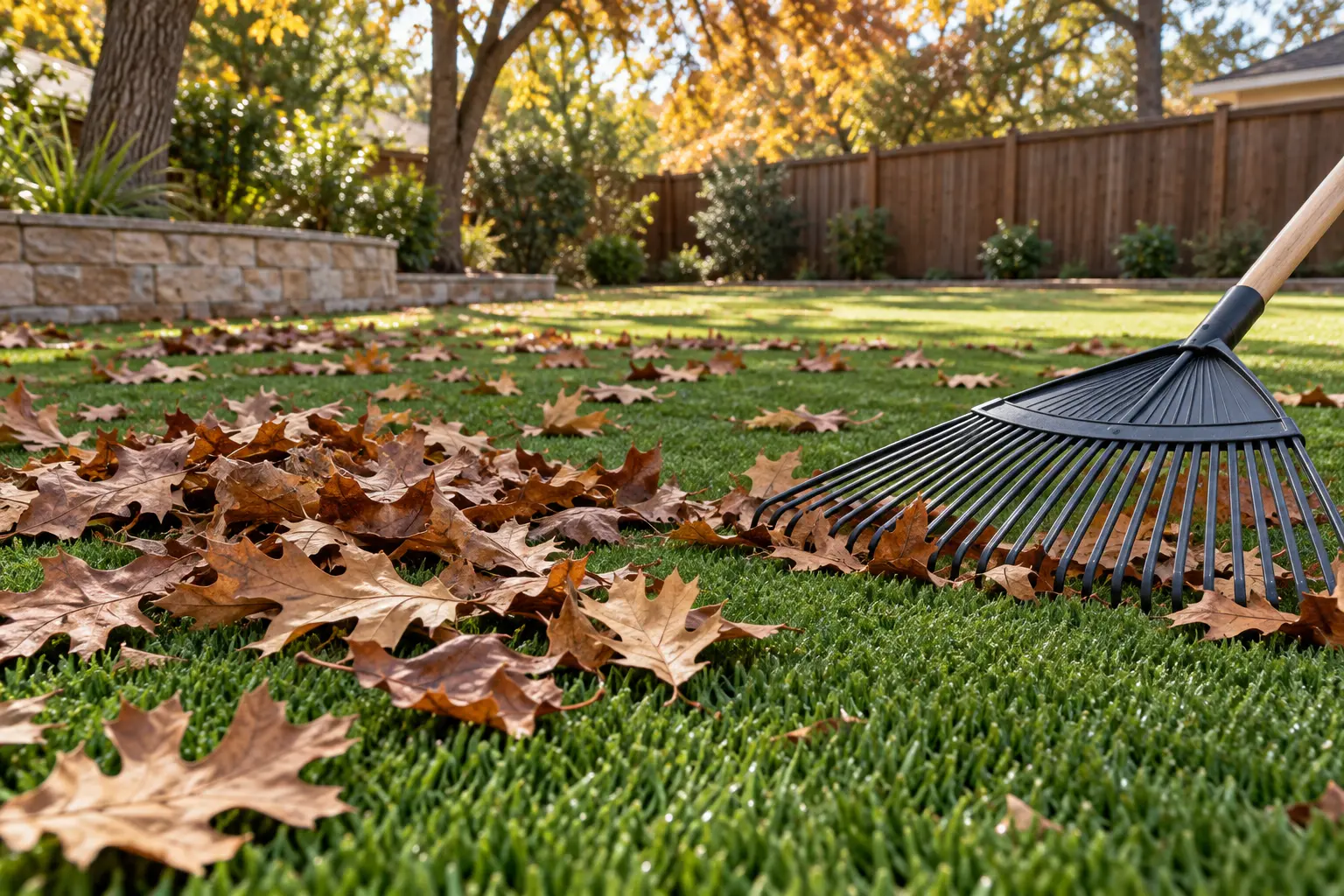
Fall debris is easiest to manage before it becomes embedded among the fibers. Collect larger pieces first, use suitable non-metal tools gently and pay attention to seams, borders and pool edges. A short, repeatable removal routine is usually more manageable than waiting for a heavy layer to cover the lawn.
Sort the material by size and condition
Large twigs and acorns need different handling from fine leaves or loose dust. Pick up pieces you can safely reach before brushing. Wet leaves may be pressed between the blades, while dry leaves can be collected with a lighter pass. Avoid trying to solve every type of buildup with one aggressive tool. Take a close look near trees and along the fence line, where material often accumulates. If sharp debris or an unfamiliar object is present, remove it carefully without driving it deeper into the surface.
Check edges before dragging a tool across them
Look for raised corners, seam gaps and exposed fasteners. A rake or broom can catch a weak area that is hidden under leaves. Work toward an accessible collection point and stop when a tool snags. Do not pull harder to get past the resistance. Clear the top layer by hand if needed so the edge can be assessed. If you discover a moving seam, photograph it and arrange a repair assessment before mechanical grooming. The goal is to remove debris while preserving the installation’s existing structure.
Work in small sections
Divide the lawn into manageable zones and finish collecting one before moving on. This prevents a pile from becoming scattered again and makes it easier to see missed material. Use gentle repeat passes appropriate to the product instead of forcing a single heavy stroke through the pile. Around furniture, lift only items you can handle safely; avoid dragging legs across the lawn. If access beneath a large piece is limited, include that in a professional cleaning request. A realistic plan accounts for what can actually be reached.
Keep debris out of neighboring systems
Do not blow or rinse leaves into a pool, visible drain opening or adjacent property. Watch the direction of wind and consider where collected material will go. Remove the pile promptly using an appropriate disposal method. The turf may look clearer after debris has been moved, but shifting the problem to a drain or pool creates another maintenance task. Where runoff routes are unclear, choose collection over rinsing material away. That also helps you see whether a separate surface-cleaning step is needed afterward.
Inspect the newly exposed surface
Once leaves are gone, check for stuck organic material, traffic flattening and patches that remain dirty. A brown mark may need compatible cleaning, but do not assume every discoloration is removable. Compare the area with nearby turf and note whether it is under a tree, beside soil or in a pet zone. Photograph persistent stains before trying products. A professional can then discuss cleaning and grooming separately, along with any limitations. Debris removal is the first step in assessment, not a diagnosis of everything beneath it.
Set the routine by how quickly debris returns
Watch the lawn after a normal windy day and adjust your checks accordingly. A heavily shaded yard under trees can need attention sooner than an open lawn. You may only need a brief collection pass when the material is still loose. If it repeatedly embeds or overwhelms manageable home care, discuss a professional visit. The Neighborhood Turf Guy cleans artificial lawns throughout DFW, Austin and Houston and can review photos to help define the work, access and areas that require special care.
Your practical checklist
- Pick up larger twigs and acorns before brushing.
- Locate seams and corners hidden beneath leaves.
- Collect debris in small sections using suitable tools.
- Keep material out of pools and drain openings.
- Inspect for embedded residue after the loose layer is removed.
Questions homeowners ask
Can I use a metal leaf rake?
Do not assume it is suitable. Follow your turf manufacturer’s tool guidance and avoid anything likely to catch or damage fibers and joints.
Should I rinse a thick leaf layer away?
Collect loose debris first. Rinsing a heavy layer can leave material embedded or move it into places you do not want it.
Do leaves mean the lawn needs replacing?
No. Loose debris is a maintenance concern; the condition of fibers, backing and support must be assessed separately.
Want a hand with your turf?
Request help with artificial turf cleaning directly from The Neighborhood Turf Guy. We review the property and local fulfillment before confirming service. Request Cleaning to discuss your needs. A request is not a booking or signed agreement.
Always follow the care guidance for your specific turf and infill. This guide is general care advice and does not replace your manufacturer’s instructions.