A narrow flattened path can make an otherwise tidy artificial lawn look worn. Start by checking whether the fibers are bent, damaged or unsupported, and inspect seams along the route. Suitable grooming may improve serviceable turf, while permanent wear or a moving base needs a different conversation.
Compare the path with a low-use area
Take close-up photos of the busy route and an adjoining corner that receives little traffic. Look at whether the fibers are present and flexible or visibly damaged. Lighting and blade direction can exaggerate differences, so compare similar conditions. Note whether the path developed gradually or appeared suddenly after an event. This comparison does not replace an onsite assessment, but it gives the provider a clear description of the issue. The whole lawn may not need the same treatment simply because one route looks tired.
Inspect support and transitions
Walk alongside the path and look for raised joints, low spots or changes near paving. If the surface moves or a seam is open, do not begin aggressive brushing. Photograph the problem and explain whether it has changed over time. A path can combine ordinary fiber flattening with an unrelated structural concern. Treating them as one problem can lead to repeated grooming without resolving the uncomfortable transition. Ask the provider to identify what appears suitable for maintenance and what needs repair or installer review.
Clear the route before grooming
Remove toys, stones and loose debris from the path. Check whether nearby soil or gravel is being carried onto the lawn from a side gate. Material among the fibers can interfere with a suitable grooming process and quickly return after a refresh. Keep the transition tidy using methods appropriate to adjacent surfaces. Avoid adding loose decorative material onto the turf to disguise the worn route. The maintenance plan should address where contamination enters as well as how the fibers are brushed.
Choose a measured grooming approach
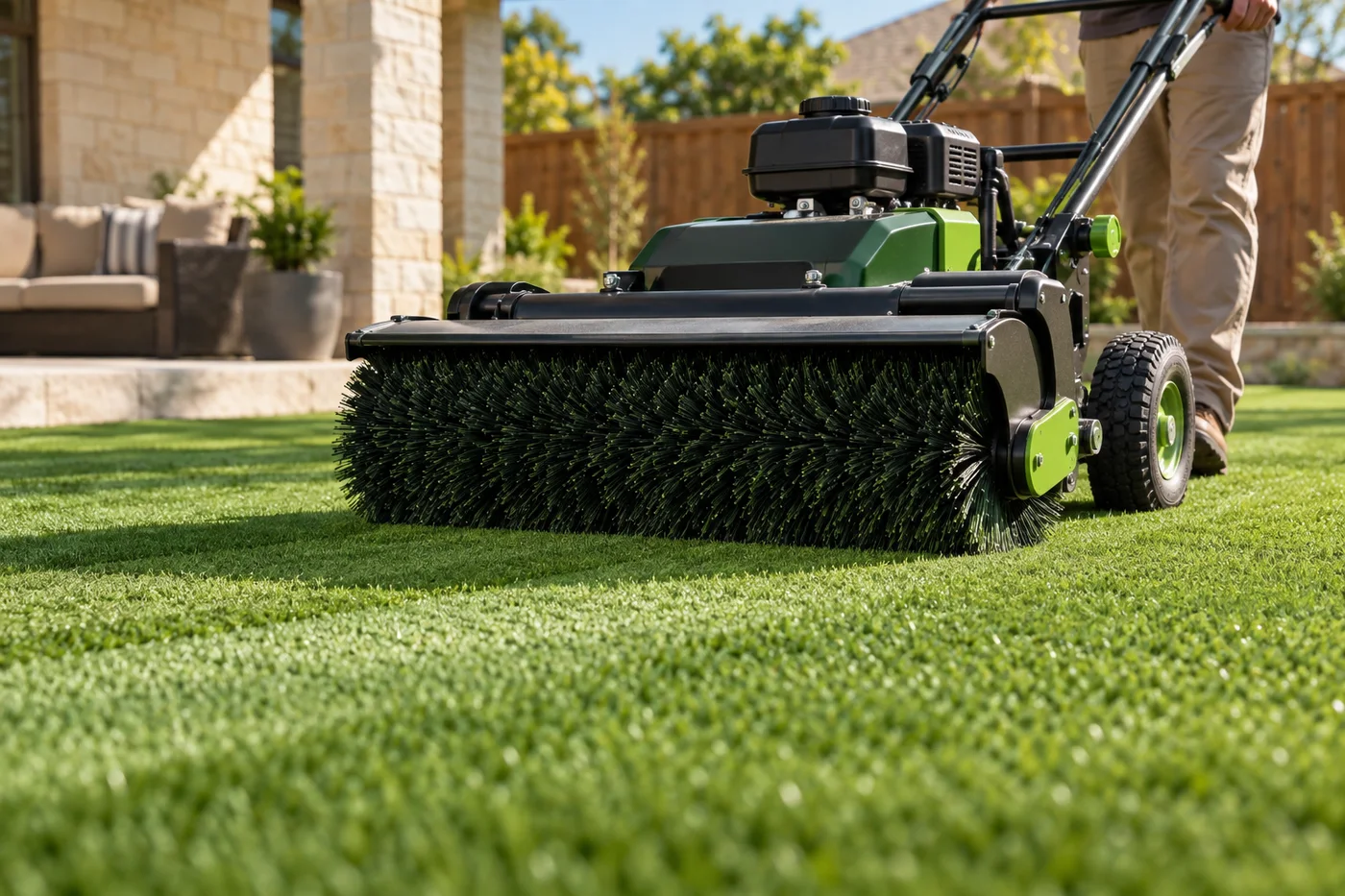
Follow the turf manufacturer’s guidance or arrange professional assessment for mechanical work. More pressure and repeated passes are not automatically better. The operator should account for product type, infill and seam condition. Ask what improvement is expected and whether permanent wear is visible. Some fibers will stand more upright after appropriate work, but an older busy path may not match an unused corner perfectly. A realistic goal is better condition and usability, with remaining differences explained rather than hidden by broad promises.
Discuss infill only if the system calls for it
Uneven material can be relevant in systems that use infill, but a flattened path does not automatically need a new layer. Ask whether redistribution is appropriate and what supports any proposed top-up. Identify the installed product before adding a different one. The quote should distinguish grooming from material work. If the path has a base depression, adding infill may not resolve the underlying shape. That concern should be assessed separately so you know what the visit is meant to change.
Plan for traffic that continues after the visit
The patio-to-gate route will still be used, so some flattening may recur. Keep up suitable debris removal and review the condition periodically rather than treating recurrence as immediate failure. Where practical, manage how heavy items cross the surface and avoid dragging furniture along the route. Photograph the result after grooming and again during ordinary use. We can assess concentrated traffic concerns in DFW, Austin and Houston and explain whether cleaning, grooming, minor repair or a larger installation review is appropriate.
Your practical checklist
- Compare a traffic path with an unused corner.
- Check transitions, seams and low spots.
- Identify gravel or soil entering from adjacent areas.
- Confirm a suitable grooming method and expected result.
- Approve any infill addition separately.
Questions homeowners ask
Will grooming erase every worn path?
No. It may improve bent serviceable fibers, but permanent wear and structural concerns remain separate issues.
Does a path need extra infill every time?
No. First identify the system and assess the existing distribution and level.
Is recurring flattening always a service failure?
No. Continued concentrated traffic can bend fibers again. Compare the result with the actual scope and condition.
Want a hand with your turf?
Request help with power brooming & grooming directly from The Neighborhood Turf Guy. We review the property and local fulfillment before confirming service. Request Cleaning to discuss your needs. A request is not a booking or signed agreement.
Always follow the care guidance for your specific turf and infill. This guide is general care advice and does not replace your manufacturer’s instructions.