Follow the trail to its starting point
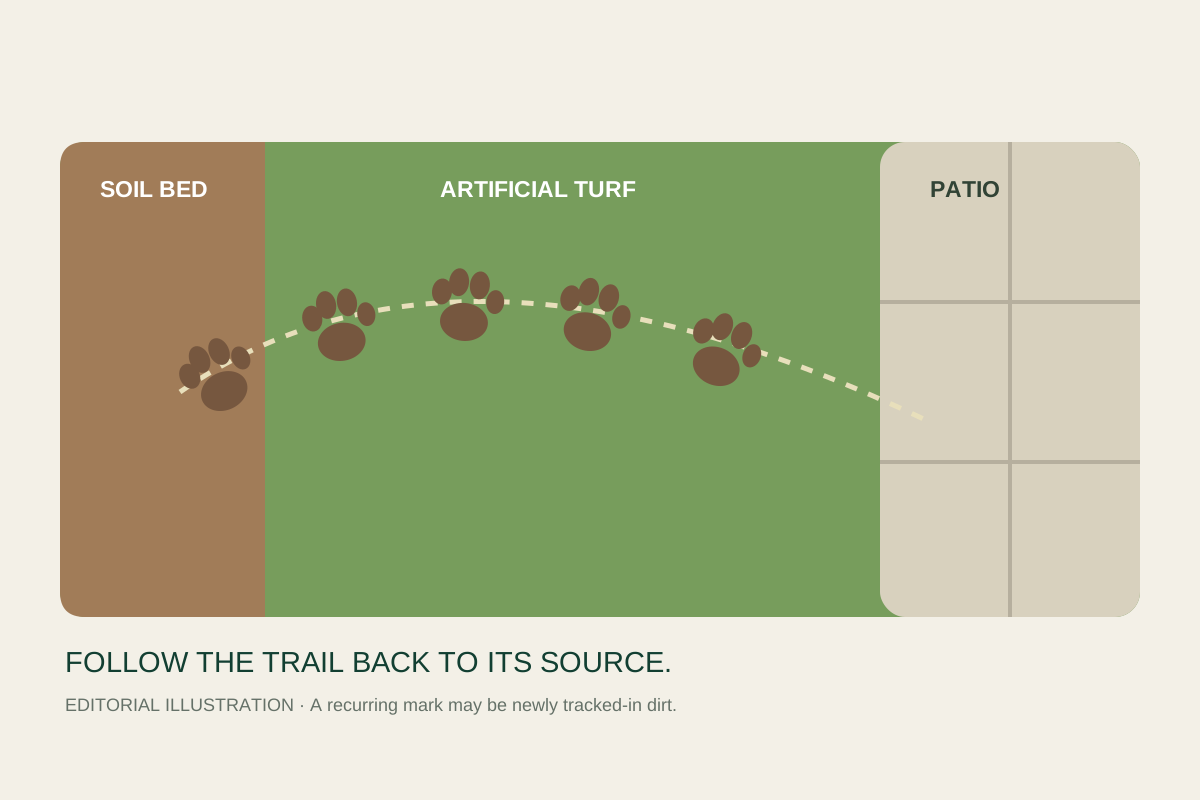
Look at where the first marks appear. Is a pet stepping through damp soil beside the lawn, returning from a walk, or cutting across a bare corner? Take one overview photo before you start. A repeating trail may be new dirt brought back onto the surface rather than evidence that the previous clean failed. Do not assume the turf itself is producing mud.
Keep a small mess from becoming a larger one
Temporarily steer people and pets away from the affected strip. Pick up loose leaves or clumps only when they lift easily without pulling fibers or infill. Avoid grinding damp soil into the pile with repeated footsteps or vigorous brushing. If you cannot tell whether the brown material is ordinary soil, pet waste or another spill, identify it before choosing a cleaning method.
Start with the care instructions, not a stronger product
For routine dirt, SYNLawn describes a garden-hose rinse as a maintenance option. Your own turf and infill instructions still govern whether and how to rinse. Use controlled water flow rather than a concentrated jet, and do not push muddy water into a pool or neighboring property. Stop if water accumulates instead of draining. A persistent stain is not a reason to experiment with bleach, solvents or mixed cleaners.
Check the surface after the loose soil is gone
Look at the same spot in similar light once it is no longer wet. Remaining discoloration, trapped grit and bent fibers are different observations, not interchangeable diagnoses. If the fibers pull, an edge lifts, or the area stays waterlogged, pause cleaning and seek product-specific guidance. Cleaning is not a promise to correct a drainage defect or reverse permanent damage.
Make the next trip across the yard easier to manage
For a simple household routine, keep a towel at the door and check paws after a muddy walk. Where practical, guide traffic along an existing clean path instead of through damp planting soil. Do not drive stakes through turf or add a permanent covering as an improvised fix. Record when the marks return and whether they follow rain, irrigation or a particular route.
Know what to send with a cleaning request
For a DFW cleaning review, share an overview of the trail, a close photo of the remaining mark, approximate turf area and any products already used. Mention repeated puddling or vulnerable seams separately. A photo helps explain the concern; it cannot establish the infill type, underlying cause or final cleaning result. Service scope and the date still need confirmation.
Care reference and next steps
See SYNLawn’s general maintenance guidance; follow the instructions for your own turf and infill. Learn about our artificial turf cleaning or request a cleaning review.