Prepare artificial turf for cooler weather by clearing accumulated debris, checking busy routes and recording seam or drainage concerns. Pet care continues when temperatures change, and a seasonal refresh should follow the turf and product instructions rather than a universal winter treatment. Use the transition to simplify maintenance before the yard becomes less frequently inspected.
Start with the buildup already present
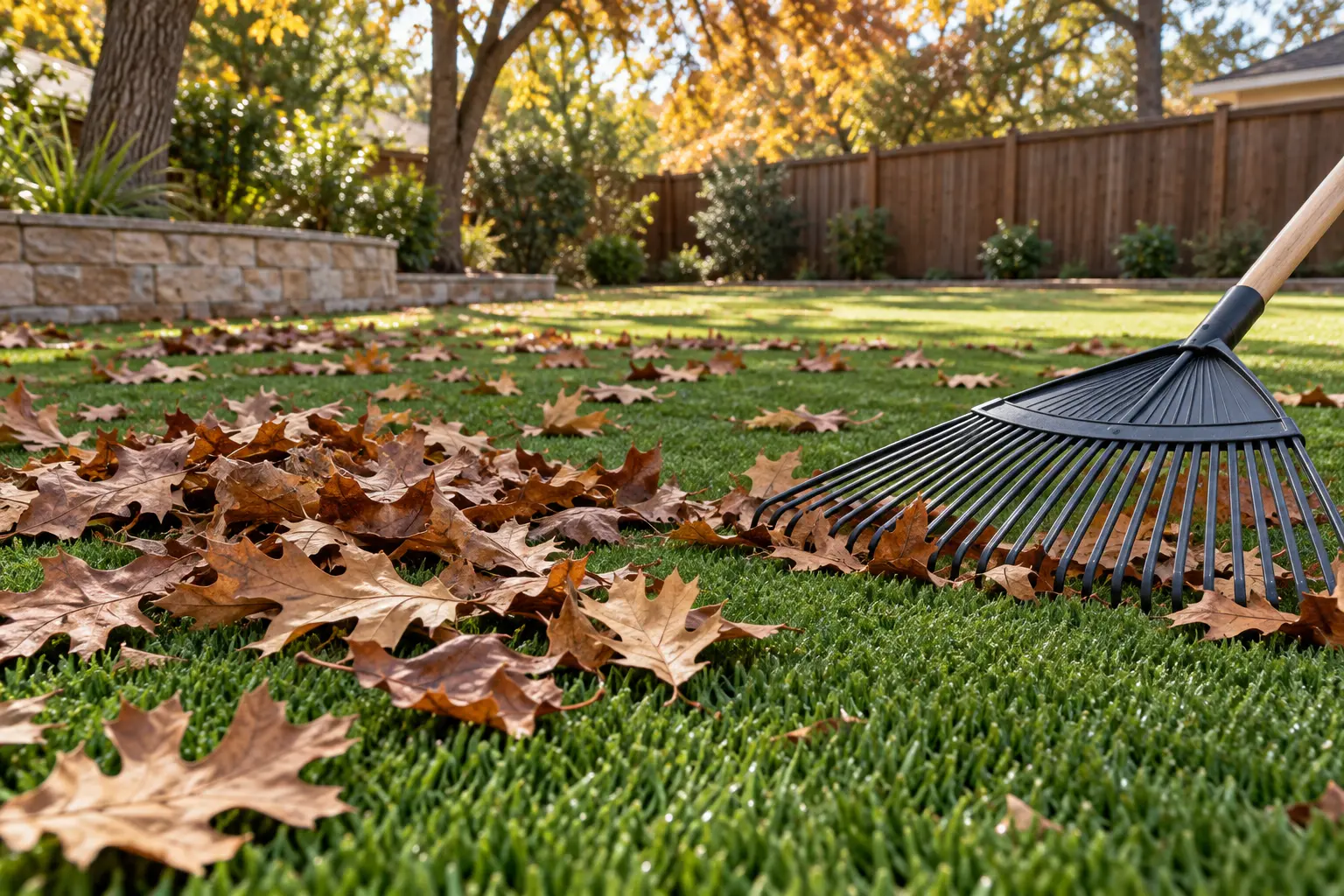
Clear suitable loose leaves and debris before they remain pressed into the pile. Check corners under trees, fence lines and the routes used by pets. A seasonal check is an opportunity to see material that ordinary quick visits to the yard may miss. Use tools appropriate to the installation and stop if an edge catches. Photograph embedded residue before selecting a deeper cleaning process. The work should respond to what is present, not add products simply because winter is approaching.
Inspect the route used every day
Even if outdoor entertaining slows down, dogs and household members may continue crossing the same gate and patio paths. Look for flattened fibers, loose transitions and changed support. These smaller routes can need more attention than unused sections. Explain whether a problem appeared recently or developed gradually. Suitable grooming may help serviceable blades, while unstable joints require assessment first. The seasonal plan should preserve access and usability rather than focus only on the view from indoors.
Keep pet treatment instructions current
Review the products you use and follow their stated application, weather and re-entry requirements. A cooler day does not make all cleaning methods interchangeable or eliminate the need for waste pickup. If a provider recommends treatment, ask how conditions affect appointment timing and aftercare. Do not improvise a stronger concentration to compensate for the season. Keep instructions available to everyone caring for the pets. The useful routine is the one that matches the actual surface and products, with concentrated bathroom areas monitored separately.
Record drainage behavior before making changes
After ordinary rainfall, photograph spots that stay wet or collect water repeatedly. Include nearby paving, downspouts and beds. Do not treat a winter-preparation visit as permission to rebuild drainage without assessment. Surface cleaning may address suitable buildup, but base and grading work require a separate scope. If the condition is longstanding, provide that history before the appointment. A seasonal record makes it easier to identify whether the concern is unchanged, improving after maintenance or pointing to a more substantial installation issue.
Avoid unnecessary material or chemical additions
A lawn does not automatically need new infill or a special chemical treatment because the calendar changed. Confirm the installed system and a specific reason for any addition. If frozen conditions arise, follow the turf manufacturer’s guidance before attempting removal or applying products; do not transfer advice from paving to the lawn without checking. Keep equipment and sharp tools from being forced through an unfamiliar surface condition. The plan should reduce avoidable damage while reserving material decisions for a compatible, assessed purpose.
Set a short repeat check
Choose a manageable routine for waste pickup, accessible debris and visible condition checks. Review the yard after unusually heavy use or a significant debris event. Keep before and after photos from any professional visit along with the accepted scope. DFW homeowners can request a seasonal turf refresh with the main concerns and access details described upfront. We discuss cleaning, suitable grooming and any separate minor repair needs so winter preparation is useful maintenance with clear expectations, not an automatic bundle of unnecessary work.
Your practical checklist
- Clear accumulated loose debris.
- Inspect daily pet and gate routes.
- Review cleaning-product weather and re-entry directions.
- Photograph recurring wet spots after normal rain.
- Approve infill or repair only for an identified compatible purpose.
Questions homeowners ask
Does artificial turf need a universal winter chemical treatment?
No. Follow the requirements of your actual turf and any product being used.
Can I apply a driveway deicer to the lawn?
Do not assume compatibility. Consult the turf manufacturer before applying a product to frozen conditions.
Do pets need less routine care in cooler weather?
Continued use still creates waste and residue. Adjust care by condition and the system’s instructions, not temperature alone.
Want a hand with your turf?
Request help with full turf refresh directly from The Neighborhood Turf Guy. We review the property and local fulfillment before confirming service. Request Cleaning to discuss your needs. A request is not a booking or signed agreement.
Always follow the care guidance for your specific turf and infill. This guide is general care advice and does not replace your manufacturer’s instructions.