After decorations and trick-or-treat traffic are gone, artificial turf may hold leaves, wrappers, tracked soil and flattened fibers. A careful reset starts with dry debris removal, separates spills from structural concerns and uses only care methods suited to the installed turf.
Walk the yard before moving everything
Start with a daylight inspection of the routes people used, the places decorations stood and the edges beside patios or planting beds. Photograph a wrapper caught near a seam, a sticky spot or a noticeably flattened path before cleaning. Move only decorations and furniture you can handle safely, and follow their removal instructions. Do not pull an anchor, cord or base across the fibers. The first walk-through helps distinguish ordinary party debris from a loose transition, burn or other condition that needs separate assessment.
Collect dry debris before adding water
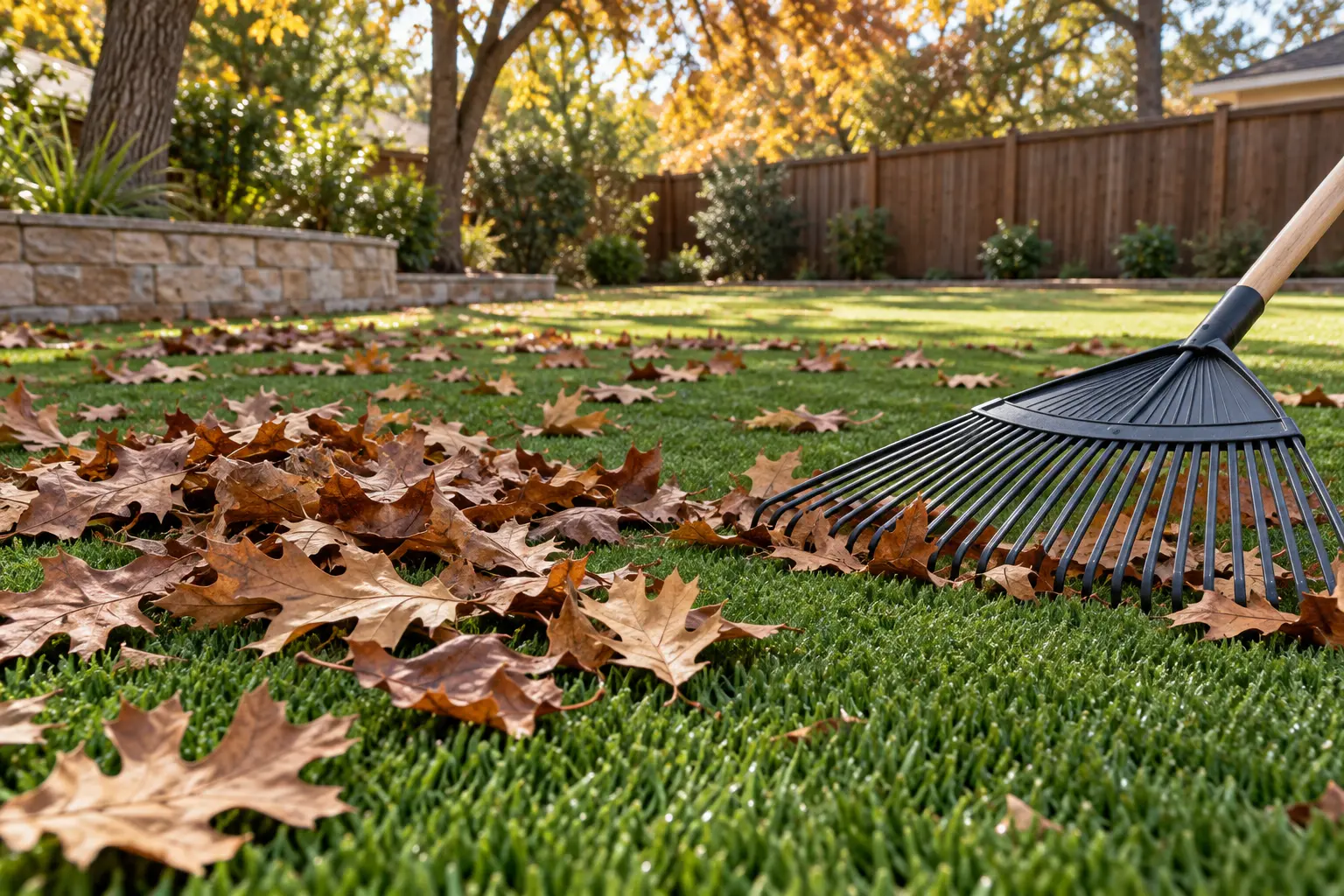
Pick up candy wrappers, plastic pieces, costume accessories and other larger items by hand while wearing suitable gloves. Use a turf-compatible tool for dry leaves and loose debris, working toward a collection point instead of pushing material under an edge. Check beneath movable decorations and along fences where wind gathers lightweight material. Removing dry debris first keeps a rinse or cleaning treatment from carrying it deeper into the pile. Avoid metal tools or aggressive settings unless the turf manufacturer specifically permits them.
Treat spills by what actually happened
A dropped drink, crushed candy and ordinary tracked soil are different cleaning problems. Remove accessible solids gently, then follow the turf and product manufacturer guidance for the residue involved. Test an unfamiliar care product in an inconspicuous area when its instructions call for that step. Do not mix cleaners, use a stronger concentration than the label allows or assume fragrance means the residue is gone. If the substance is unknown, describe the location and appearance when requesting professional help instead of guessing.
Check pet areas separately
A busy evening can interrupt normal pet cleanup or concentrate use in one corner. Remove solid waste promptly and inspect favorite routes, fence lines and the area near the door. Note whether odor appears only in a localized spot or across a wider section. A suitable pet-area treatment should follow its dilution, contact-time, rinsing and re-entry directions. Seasonal cleanup does not replace the household's normal waste routine, and continued pet use can create new buildup after the yard is cleaned.
Groom only after checking edges and seams
Foot traffic and decoration bases can temporarily bend serviceable fibers. Before brushing, look for a moving edge, visible gap or unfamiliar wrinkle. Suitable grooming may help ordinary flattening, but it should not be used to force a loose transition back into place. Work with the turf system rather than against it, and keep heavy equipment away from uncertain areas. If a defect is visible, document it and keep the cleaning scope separate from any later repair assessment.
Use the reset to plan the next cleaning
Take matching photos after the surface is dry and ordinary debris is gone. Record any product used and keep its instructions. Watch how the main paths, pet zones and shaded edges behave during normal use over the next several days. The Neighborhood Turf Guy can review cleaning requests across its listed request areas, with coverage, local cleaner availability, scope and timing confirmed before service. Share the service ZIP, approximate artificial-turf area and the conditions you want reviewed; a request does not automatically schedule an appointment.
Your practical checklist
- Photograph traffic routes, decoration footprints and visible residue.
- Collect wrappers, leaves and loose debris before adding moisture.
- Follow turf-compatible product instructions for any spill.
- Inspect pet areas, edges and seams as separate conditions.
- Save after-cleaning photos and the names of products used.
Questions homeowners ask
Can I use a leaf blower after Halloween?
Use only equipment and settings suitable for the installed turf, surrounding property and local rules. Collect debris rather than directing it into neighboring areas or drains.
Will brushing remove every decoration footprint?
Suitable grooming may help ordinary bent fibers, but heat damage, torn turf or an unstable edge needs separate assessment.
Does sending a cleaning request book a date?
No. We review the address, scope, pricing and local cleaner availability before confirming service and scheduling.
Want a hand with your turf?
Request help with artificial turf cleaning directly from The Neighborhood Turf Guy. We review the property and local fulfillment before confirming service. Request Cleaning to discuss your needs. A request is not a booking or signed agreement.
Always follow the care guidance for your specific turf and infill. This guide is general care advice and does not replace your manufacturer’s instructions.