Choose a turf grooming method by surface type, condition and access, not simply by lawn size. A suitable hand brush can handle modest routine work; professional power brooming may help with larger or heavily flattened areas when the installation is sound. Weak seams, putting greens and unfamiliar infill all deserve a closer look before mechanical work begins.
Identify what you want grooming to change
Grooming is most useful when serviceable fibers are bent or the surface needs appropriate redistribution of existing infill. It is not a universal answer to discoloration, odor or damage. Walk the lawn and decide whether the issue is a traffic path, a furniture imprint or an overall tired appearance. Separate that from brittle, melted or missing fibers. Photograph the area with the blades visible. Setting a specific goal makes it easier to decide whether a simple brush, professional equipment or a different service is warranted.
Use hand tools for manageable routine care
A manufacturer-approved non-metal brush gives you control around small areas and delicate transitions. Work gently and follow the product’s guidance on direction and pressure. Stop if the tool catches, the backing shifts or fibers come away. More force is not a substitute for compatibility. A small yard may be practical to maintain by hand, but deeply embedded debris or extensive flattening can require more time than a quick pass. Clear loose material first so you can see the fibers rather than pushing leaves through them.
Understand what professional equipment changes
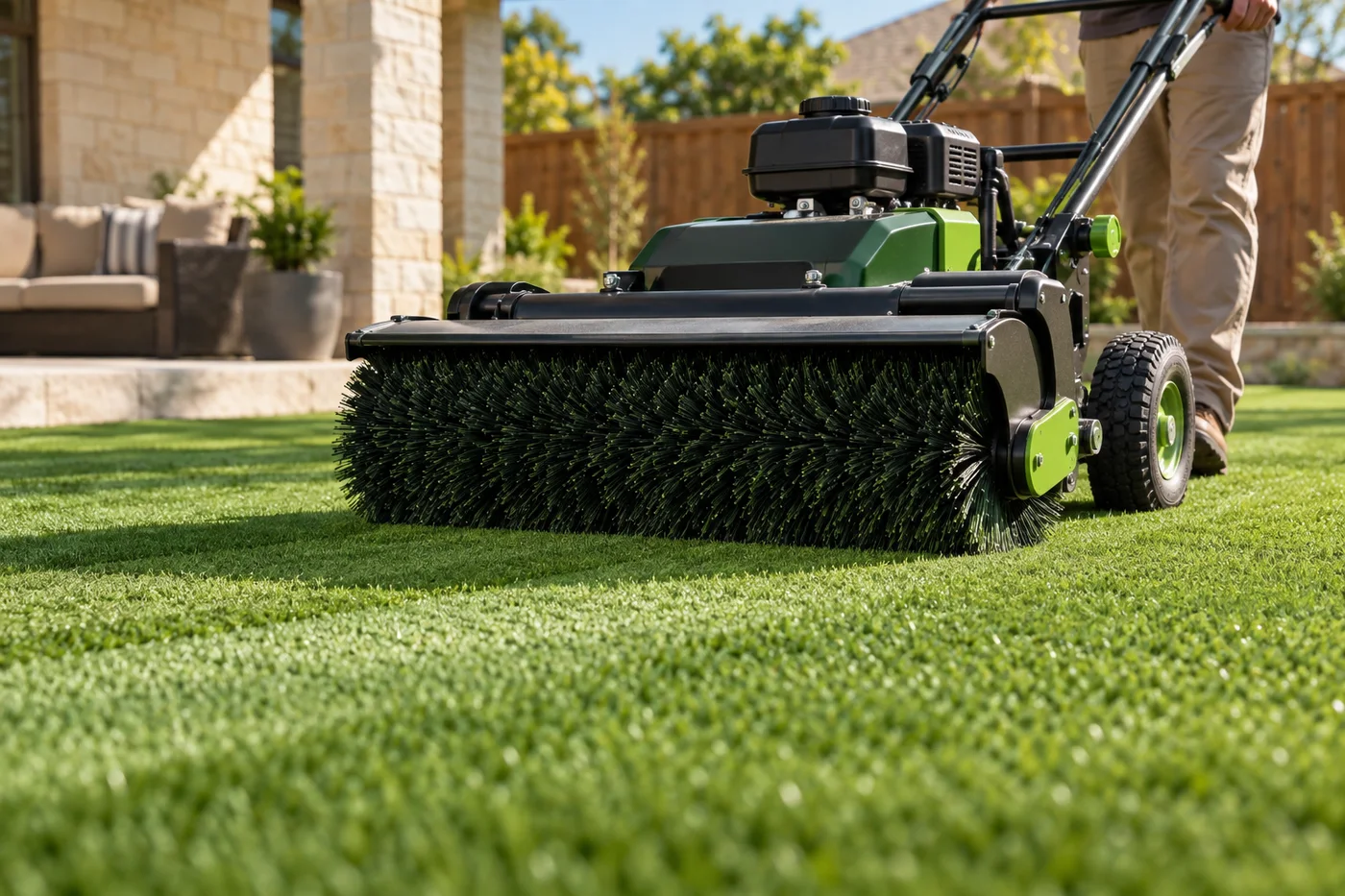
A rotating brush works differently from a handheld rake or broom. The operator needs to match the method to the turf, existing infill, seam condition and surrounding surfaces. Access also matters: narrow gates, steps and steep transitions can limit suitable equipment. Ask whether a professional will assess those conditions before starting and how they will approach edges. The value of the service is the inspection and controlled process as well as the machine. Avoid selecting solely on the promise of the most powerful equipment.
Treat seams and borders as separate work areas
Look for gaps, lifted corners, exposed fasteners or a loose transition to paving. These conditions may need repair or a cautious alternative before grooming. A tool that catches a weak joint can turn a minor issue into a larger one. Mention recent installation work or any spot repaired previously. Do not use brushing as a way to flatten a raised seam and hide it. A sound edge should remain stable during appropriate maintenance; a moving edge deserves investigation.
Check specialty surfaces and infill requirements
A putting green is not simply a shorter version of a landscape lawn. Its fibers, infill and performance expectations can call for a different maintenance process. Likewise, some pet systems do not require infill. Show your cleaner the product details, if you have them, rather than assuming every surface takes the same brush and material. Ask whether infill is being redistributed or added, and why. Changes to material or quantity should be discussed before they are included in the work.
Evaluate results after normal use
Compare the groomed area with your before photos and look at how the blades stand, especially along the main travel route. Some paths flatten again because the household continues using them. That does not automatically mean the grooming failed. Keep up appropriate debris removal and review how often the area needs attention. Permanent wear may remain even after careful work. The right result is a usable, better-maintained surface with clear expectations, not a guarantee that an older lawn will become indistinguishable from a new installation.
Your practical checklist
- Identify the turf type and whether infill is present.
- Inspect seams, borders and raised spots before brushing.
- Clear loose debris before any grooming pass.
- Confirm equipment access and protection of nearby surfaces.
- Separate reversible flattening from permanent fiber damage.
Questions homeowners ask
Will power brooming remove dog odor?
Grooming can help expose and tidy the surface, but pet residue needs a compatible cleaning process. Brushing alone is not a complete odor treatment.
Can a household vacuum replace a turf brush?
Do not assume it is suitable. Equipment can disturb infill or damage components; follow the turf and equipment manufacturers’ guidance.
How often should I power broom?
There is no universal frequency. Consider actual traffic, fiber condition and product instructions, then assess whether lighter routine care is sufficient.
Want a hand with your turf?
Request help with power brooming & grooming directly from The Neighborhood Turf Guy. We review the property and local fulfillment before confirming service. Request Cleaning to discuss your needs. A request is not a booking or signed agreement.
Always follow the care guidance for your specific turf and infill. This guide is general care advice and does not replace your manufacturer’s instructions.