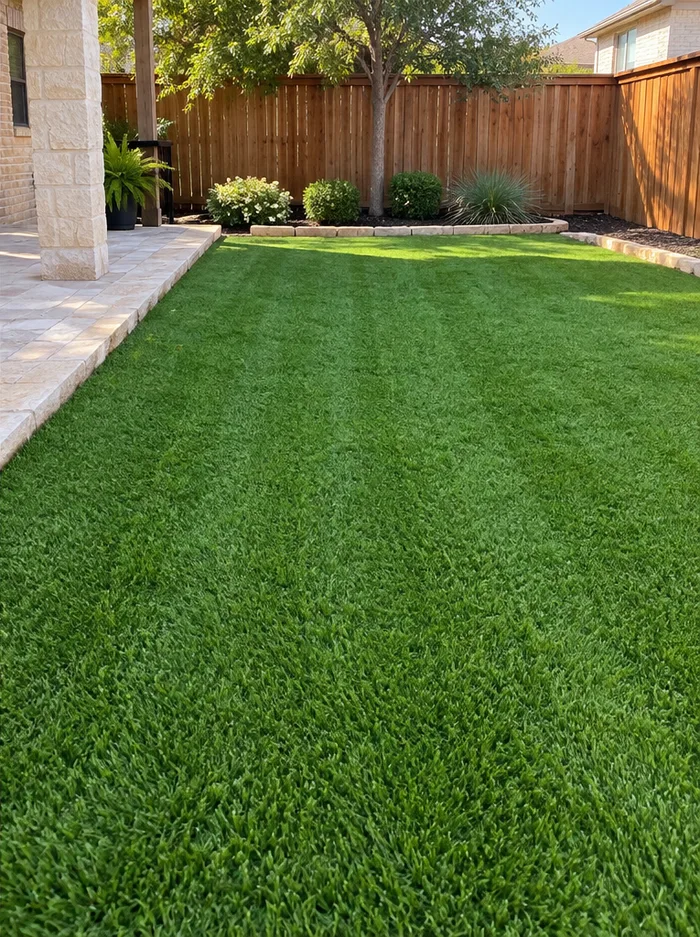
A thorough clean, suitable grooming and an infill assessment can make serviceable older turf look fresher. Start by checking the condition of the fibers, backing, seams and drainage. Some signs of aging improve with maintenance; permanent damage may require repair or replacement.
Clear what is hiding the turf
Leaves, dust and pet hair can build up gradually until the lawn looks dull. Removing that material reveals the condition underneath. Cleaning treatment should match the turf and any existing infill, especially in spaces used heavily by pets.
Lift the flattened areas
Grooming is often the most visible part of a refresh. A suitable power broom helps lift fibers and redistribute infill around high-traffic areas. The aim is a better finish across the yard, with appropriate expectations for areas that are permanently worn.
Check the support beneath the blades
Low or uneven infill can contribute to a tired appearance in systems that use it. Adding material is not always necessary; redistribution may be enough. Compatibility and the manufacturer’s recommended level should guide the decision rather than an automatic top-up.
Separate maintenance from replacement
Loose edges and small seams may be repairable, while widespread deterioration or extensive heat damage can need a bigger fix. A refresh should be an informed choice. Ask what improvements are realistic before authorizing work on an aging installation.
Want a hand with your turf?
Request help with full turf refresh directly from The Neighborhood Turf Guy. We review the property and local fulfillment before confirming service. Request Cleaning to discuss your needs. A request is not a booking or signed agreement.
Always follow the care guidance for your specific turf and infill. This guide is general care advice and does not replace your manufacturer’s instructions.