
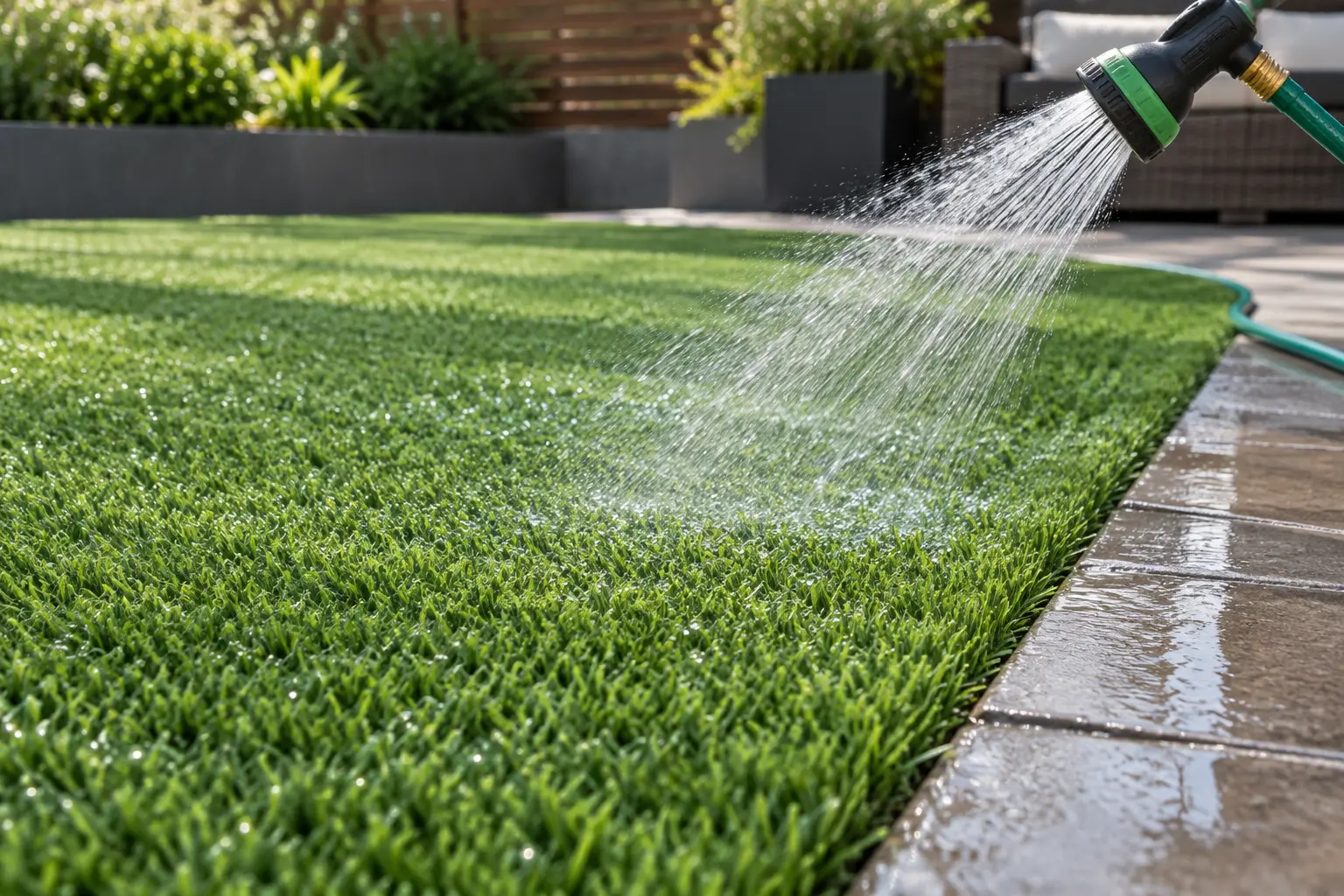
A shaded corner may collect debris, receive concentrated pet use or stay damp longer than the open lawn. Treat those observations separately and record the pattern before choosing a service. Surface cleaning may help with buildup, while persistent wetness or a base concern needs a different assessment.
Compare conditions within the same yard
Photograph the shaded section and a sunny area after ordinary rain or manufacturer-approved rinsing. Note when the water event ended and when you checked each spot. Do not assume a difference automatically means a defect. Trees, surrounding surfaces and use patterns can influence what you observe. A repeated timeline gives the provider useful context. Include whether the corner has always behaved this way or changed after landscaping, fence work or other activity. That history is more informative than a single image of damp turf.
Remove the debris that collects at the edge
Leaves, hair and small twigs often settle in sheltered locations. Clear accessible loose material with suitable tools, taking care near joints and the perimeter. Avoid pulling turf up or pushing residue into hidden openings. Once the top layer is gone, inspect what remains. If material is embedded or the area is difficult to reach, include it in a professional scope. Debris removal may improve usability, but it does not establish whether the drainage beneath the surface is working as intended.
Look at incoming water and surrounding surfaces
Check visible downspouts, adjoining beds and paving for routes that send water toward the corner. Photograph the wider setting so the provider understands the source, not just the wet patch. Clear only ordinary accessible debris; leave buried drainage or structural changes to an appropriate professional. Recent landscape work can be relevant even if the turf itself was untouched. A maintenance plan should not ignore water arriving from elsewhere. Ask what can be assessed during cleaning and what would require an installer or drainage specialist.
Choose a compatible process for the actual concern
If the main issue is pet residue, discuss that directly rather than treating dampness as proof that stronger chemicals are needed. If it is embedded leaf material, suitable debris removal and cleaning may be the focus. Follow the selected product’s weather, application and drying requirements. Ask whether conditions on the appointment day are appropriate. Avoid piling new material onto the corner to absorb or disguise the wetness without understanding compatibility and drainage. The process should target an identified issue with clear limits.
Do not diagnose unusual growth from a photo alone
If you notice a suspicious deposit, texture or persistent discoloration, describe what you see and how it changed. Avoid calling every green or dark mark mold or assuming a particular treatment is appropriate. Identification and product guidance may be needed before work. Keep children and pets from interfering with an area under assessment when instructed. A turf-cleaning service should not promise medical or environmental remediation beyond its scope. Clear observations and suitable professional advice are more useful than an improvised chemical response.
Recheck during ordinary use
After a suitable clean or separate repair, compare the same corner under similar conditions. Keep photos and note whether residue, odor or wetness changed. If the original concern remains, report which part remained rather than ordering another identical treatment automatically. Shaded areas may still require different routine attention from sunny lawn. We can discuss surface care and visible concerns in DFW, Austin and Houston and explain when the observations point beyond an ordinary cleaning visit.
Your practical checklist
- Compare shaded and open areas after the same water event.
- Record whether the condition is new or longstanding.
- Photograph surrounding runoff sources.
- Clear suitable accessible debris before assessment.
- Separate residue cleaning from drainage or structural work.
Questions homeowners ask
Is slower drying always an installation defect?
No. It is an observation to assess alongside shade, water sources and the installation’s behavior over time.
Can deodorizer solve a permanently wet corner?
No. Surface treatment cannot change grade or rebuild a base.
Should I add sand to dry the corner out?
Do not add material without identifying the turf system and the cause of wetness. A compatible infill decision is separate from drainage correction.
Want a hand with your turf?
Request help with artificial turf cleaning directly from The Neighborhood Turf Guy. We review the property and local fulfillment before confirming service. Request Cleaning to discuss your needs. A request is not a booking or signed agreement.
Always follow the care guidance for your specific turf and infill. This guide is general care advice and does not replace your manufacturer’s instructions.