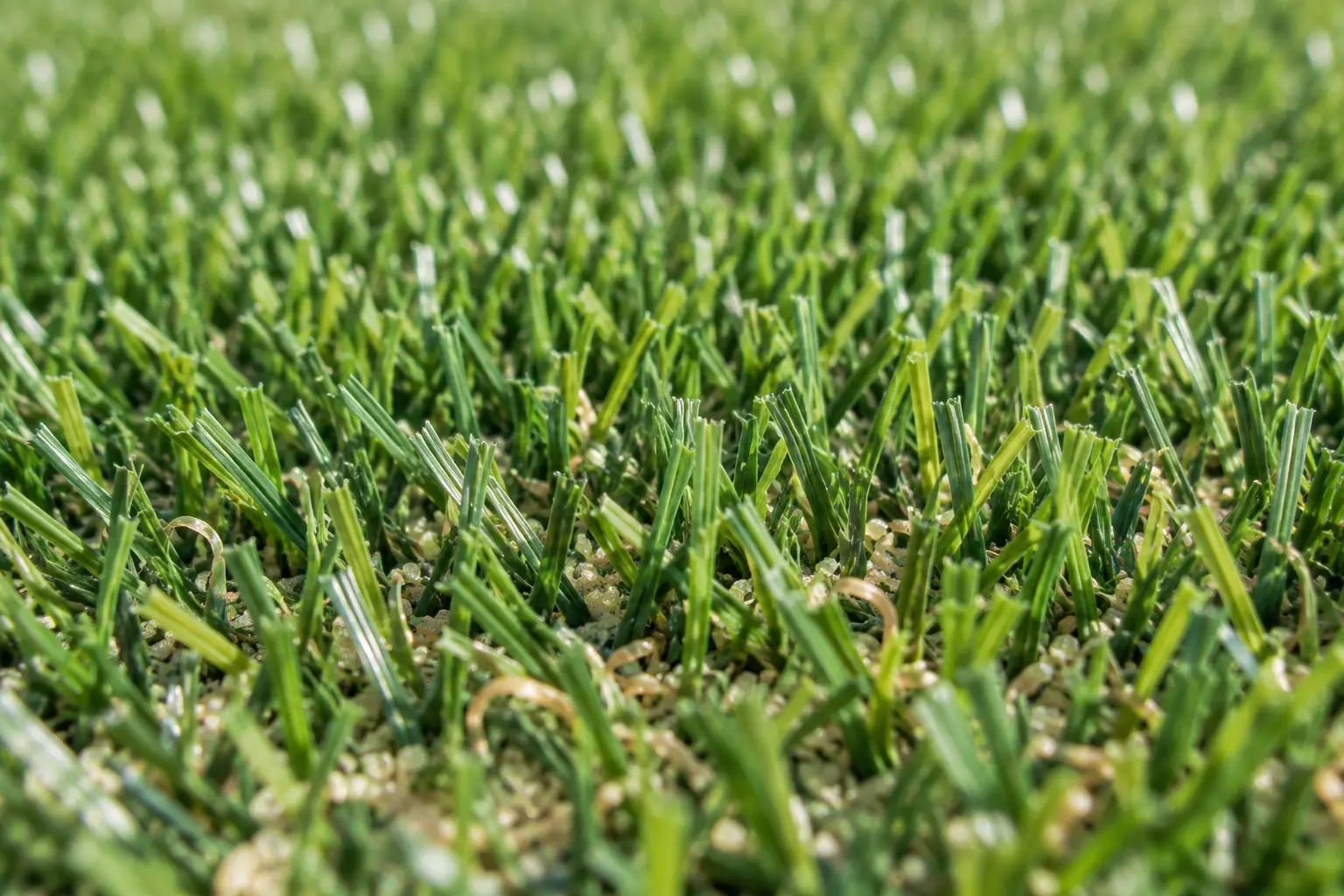
Adding infill is a material decision, not a routine finishing step for every turf clean. Identify the installed product, assess its distribution and clarify what a top-up is meant to achieve. A compatible addition can be appropriate in some systems, while other lawns need redistribution, different work or no infill at all.
Find out what is already installed
Check the original estimate, invoice or manufacturer documents for the turf and infill names. If a previous company added material, collect that record too. A homeowner may know the installation was ‘pet friendly’ without knowing which product was used. That description is not enough to select a replacement. Send available paperwork with your service request and ask what can be confirmed onsite. Some systems have different requirements, so a recommendation should begin with identification rather than assuming that every artificial lawn contains the same sand.
Inspect distribution across the whole area
Compare a busy route, an unused corner and the location beneath movable furniture. Material can be uneven without the entire installation lacking infill. Document any exposed backing or areas that feel different underfoot, but do not treat those observations as proof that a specific quantity must be added. Suitable grooming may redistribute existing material. Ask whether the provider will assess multiple locations and why they recommend an addition. A uniform-looking finish is useful, but appearance alone does not establish the correct specification.
Define the purpose of the proposed work
Is the goal fiber support, restoring a manufacturer-specified level, addressing concentrated wear or changing material in a pet area? These are different projects. A good scope identifies the reason, product and method rather than simply listing ‘infill included.’ If odor is the main issue, ask how cleaning and drainage will be considered before material is added. A fresh layer cannot explain or correct every source of residue. Keep the cleaning scope and material scope clear enough that you know what each part of the visit is expected to improve.
Avoid mixing on a guess
Different products have distinct sizes, compositions and care requirements. Ask whether the proposed material is compatible with the installed turf and existing infill, and request manufacturer guidance where needed. The cheapest available bag or a product used successfully in another yard is not automatically appropriate. Do not assume that more material is always beneficial. The quantity should follow the actual system’s requirements and condition. If compatibility cannot be established, pause the material decision while continuing any separately appropriate cleaning work.
Ask for a transparent material quote
Request the product name, the area being treated and the reason for the quantity. Clarify whether the price includes delivery, spreading, working the material into the surface and cleanup of adjacent paving. If removal is proposed, ask how it will be performed and what happens to the removed material. These details influence both the scope and the result. You should be able to distinguish a small localized top-up from a full-yard intervention. Additional work should be agreed before the provider opens bags or begins removal.
Keep a record after the work
Save the material name and any product-specific care instructions. Take close-ups of the finished surface and note the date. During normal use, watch whether the area remains comfortable and whether the original concern improves. Report visible excess material on paving or unexpected changes instead of adjusting the installation yourself. If the goal was a specific maintenance correction, evaluate that goal. The record becomes valuable at the next visit and prevents a future provider from guessing which products have been combined in the lawn.
Your practical checklist
- Gather turf, infill and previous-service paperwork.
- Compare high-traffic and low-traffic areas.
- Ask why material is needed instead of redistribution alone.
- Confirm product compatibility and proposed quantity.
- Save the product name, date and finished photos.
Questions homeowners ask
Does every artificial lawn need infill?
No. Requirements vary by product and installation. Follow the actual turf system’s specifications.
Can adding infill replace a pet-area cleaning?
No. Material work and cleaning address different needs, and residue or drainage concerns should be assessed directly.
Can you quote an infill amount from square footage alone?
Area is one input, but the installed system, current level and purpose of the work also matter.
Want a hand with your turf?
Request help with infill maintenance & replacement directly from The Neighborhood Turf Guy. We review the property and local fulfillment before confirming service. Request Cleaning to discuss your needs. A request is not a booking or signed agreement.
Always follow the care guidance for your specific turf and infill. This guide is general care advice and does not replace your manufacturer’s instructions.