
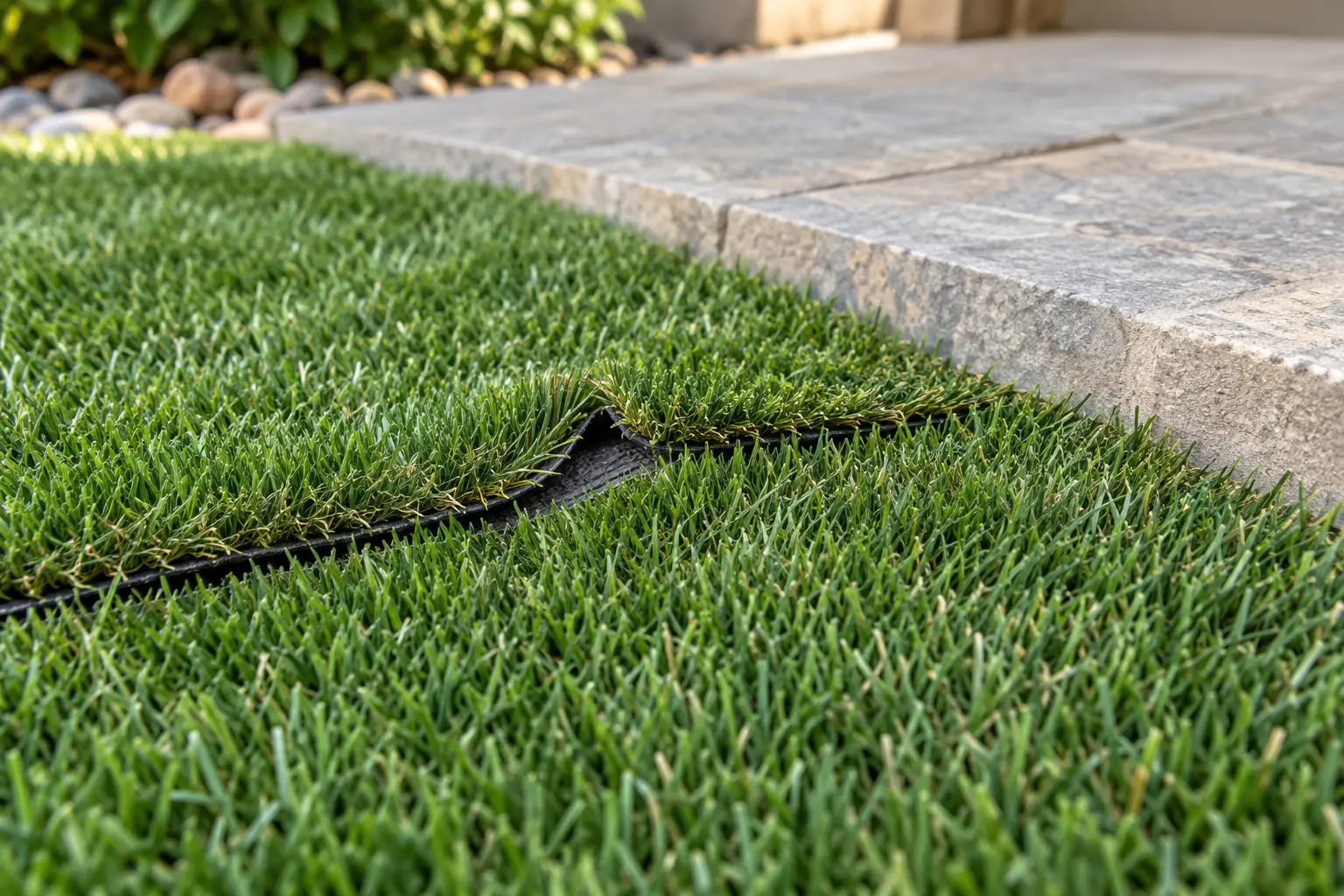
A dirty border can continually return soil, gravel or leaves to an otherwise clean artificial lawn. Inspect the transition, collect suitable debris and distinguish simple buildup from a loose edge or runoff issue. Maintaining the surrounding route is part of understanding how the turf becomes dirty again.
Look at the border as a route
Watch how people and pets cross between paving and grass. Note where loose soil or gravel is carried onto the surface and where leaves settle against the edge. Photograph both the turf and the adjacent area. A cleaner needs that wider view to understand the source. If you focus only on the green section, the visit may improve it temporarily while the adjoining route immediately returns material. The aim is a maintenance plan that accounts for the transition rather than repeatedly treating the same symptoms.
Inspect stability before brushing
Check for a raised lip, gap, moving edge or exposed component. Do not press a loose border down with a heavy object and assume it is repaired. Avoid dragging a rake across a defect concealed by debris. Photograph the issue and ask whether a minor repair is suitable. An edge can be dirty and physically unstable at the same time; those concerns deserve separate scopes. A cleaning process should work around known weaknesses and avoid using mechanical force as an improvised way to close the transition.
Collect accessible buildup carefully
Remove leaves, hair and larger loose pieces using tools appropriate to the turf and adjacent paving. Work toward a collection point rather than pushing material under the edge. If debris is embedded or difficult to reach, describe it in the service request. Do not lift the lawn to investigate without proper assessment. The border may contain installation details you cannot see. A gentle surface approach lets you expose the condition while preserving the components that keep the transition stable.
Trace ordinary runoff
After rain or suitable routine rinsing, observe whether water carries material from the patio onto the lawn or collects at the boundary. Record where it comes from and where it leaves. Clear ordinary surface debris from accessible drain covers if safe, but leave buried systems and grading changes to an appropriate professional. A recurring flow of soil may reflect an adjoining landscape issue. Cleaning the turf can remove suitable residue, but it cannot stop every incoming source. Discuss that limit before booking repeated refreshes.
Keep the adjoining surface in the routine
Use an appropriate care method for paving, beds or paths next to the lawn. Do not assume a chemical suitable for stone is suitable for turf. Keep runoff and product compatibility in mind when surfaces are serviced together. Moving furniture should not scrape across the boundary, and heavy loads deserve a planned route. A cleaner can explain how the turf portion will be protected during work. Maintaining the transition does not require treating every surface identically; it requires understanding how one affects the other.
Judge the result over normal use
Take a finished photo and check the edge after ordinary traffic or rainfall. If material quickly returns, identify whether it is fresh tracking, falling debris or a remaining cleaning concern. If the edge moves again, report it rather than brushing over it. We can discuss turf cleaning and minor edge issues in DFW, Austin and Houston. Share the wider setting, the source of buildup and any instability so the recommendation addresses the border’s actual role in your yard.
Your practical checklist
- Photograph the turf and adjacent patio or bed.
- Identify tracking and runoff sources.
- Check for gaps or movement before brushing.
- Collect debris rather than pushing it under the edge.
- Review the border after normal traffic and rain.
Questions homeowners ask
Is dirt at the border always a turf-cleaning failure?
No. New material may be arriving from nearby paths, beds or runoff. Compare the source and condition with the service scope.
Can I tuck a loose edge back under the patio?
Do not improvise a repair. The transition and cause of movement should be assessed.
Should all adjacent surfaces use the same cleaner?
No. Compatibility varies by material, and runoff toward the turf must be considered.
Want a hand with your turf?
Request help with artificial turf cleaning directly from The Neighborhood Turf Guy. We review the property and local fulfillment before confirming service. Request Cleaning to discuss your needs. A request is not a booking or signed agreement.
Always follow the care guidance for your specific turf and infill. This guide is general care advice and does not replace your manufacturer’s instructions.